
Choosing the right Wireless Sport Earbuds is more complicated than picking the pair with the loudest bass. During training, small details matter: a loose fit can ruin a run, while weak controls can interrupt a workout. Sweat, wind, traffic, and long listening sessions all test an earbud’s real performance.
This guide presents seven practical tips for making a more confident choice. It examines fit, stability, sound quality, battery life, water resistance, controls, and safety features. Each point reflects common testing methods used by audio reviewers and everyday athletes. Look for secure ear tips, clear microphones, reliable Bluetooth connections, and controls you can use with damp fingers. Comfort deserves equal attention. A technically impressive model is still a poor choice if it causes pressure after thirty minutes.
Specifications can help, but they do not tell the whole story. Battery claims may change with volume, codec, and noise cancellation. Water-resistance ratings also have limits. They do not always protect against every training environment. I have found that personal fit often matters more than a longer feature list. That conclusion may sound obvious, yet it is frequently overlooked.
The best option depends on your sport, listening habits, and surroundings. Cyclists may value awareness, while gym users may prefer stronger isolation. Runners might prioritize stability and lightweight design. These tips will help you compare products carefully, avoid exaggerated marketing claims, and choose earbuds that perform reliably beyond the first workout.
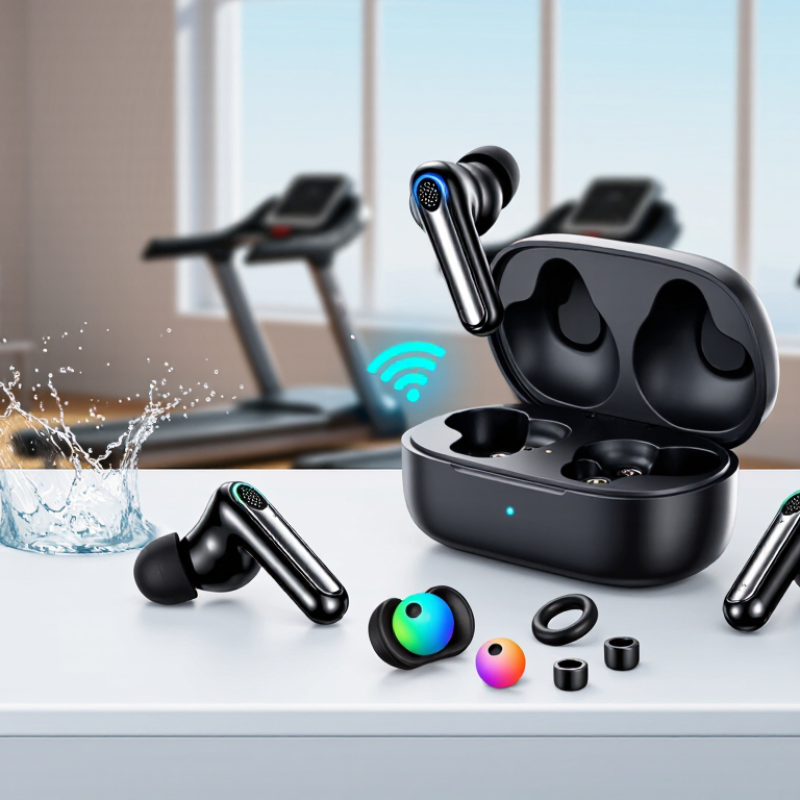
Before choosing wireless sport earbuds, define where and how you will use them. The World Health Organization recommends 150–300 minutes of moderate activity weekly, but workouts vary widely. A runner needs stable fit, sweat resistance, and awareness of traffic. A weight-training user may value secure controls and clear voice prompts. For cycling outdoors, fully isolating earbuds can create an unnecessary safety risk. Open-feel designs may suit that use case better.
Match the earbuds to real moments, not imagined ones. For short gym sessions, a comfortable fit and simple controls may matter more than maximum battery life. For long hikes, check playback time, charging options, and weather protection. The Consumer Technology Association reports that health and fitness tracking remains a major reason consumers use connected devices. However, sensors do not make every workout smarter. Consider whether you will actually use heart-rate or activity features. I often overestimate these extras, then ignore them after a week. That is worth admitting.
ACSM’s 2024 Worldwide Survey of Fitness Trends ranked wearable technology as the leading fitness trend. Still, data features should support your routine, not distract from it. Test the earbuds while moving your head, sweating, and adjusting clothing. Listen for pressure after thirty minutes. Tiny discomfort becomes obvious later. Also check microphone performance if you take calls between sets. A careful use-case list usually reveals the right balance of fit, sound, awareness, durability, and price.
Wireless sport earbuds should stay secure when your pace changes, not only when you stand still. During a trial, walk briskly, climb stairs, and turn your head sharply. A reliable fit should feel firm without creating pressure inside the ear. Try different ear-tip sizes, because the best option is not always the largest one. Small details matter.
A proper seal can improve sound quality and reduce the need for unsafe volume levels. However, a tight seal may feel uncomfortable during a long workout. Wear the earbuds for at least twenty minutes before deciding. Check for soreness around the ear, slipping caused by sweat, or pressure near the ear canal. Then test a few quick movements: jog in place, bend forward, and shake your head gently. If one earbud loosens, the shape may not match your ear well. It happens.
Physical controls also deserve attention. You should adjust playback without pushing the earbuds deeper. Touch controls can become unreliable with wet fingers, so test them after light exercise. Keep enough awareness of nearby sounds when training outdoors. A secure fit should not isolate you completely from your surroundings.
Ear shapes differ, and even the same person may need different tip sizes on each side. I once chose comfort at the first try, but the earbuds shifted after thirty minutes. That mistake changed my testing routine. Stability is not a single feature; it is the result of fit, comfort, movement, and real workout conditions.
| No. | Selection Tip | What to Check | Practical Test or Benchmark | Why It Matters for Sport |
|---|---|---|---|---|
| 1 | Prioritize a Secure Fit | Look for multiple ear-tip sizes and, if needed, ear wings or hooks that hold the earbuds in place. | Try each size and gently shake your head, walk, bend, and perform light hops. The earbuds should remain seated without constant readjustment. | A secure fit reduces movement-related loosening, improves sound consistency, and helps prevent one earbud from falling out during exercise. |
| 2 | Check Long-Session Comfort | Assess ear-tip pressure, housing shape, weight distribution, and whether the earbuds touch sensitive areas of the ear. | Wear them continuously for 30–60 minutes while walking or exercising. Stop if you notice pain, numbness, hot spots, or increasing pressure. | Comfort becomes more important as workout duration increases. Pressure or friction can distract you and may cause skin irritation. |
| 3 | Evaluate Stability During Movement | Consider ear hooks, stabilizing fins, low-profile housings, and balanced weight rather than relying only on a tight seal. | Test them during walking, jogging, stair climbing, side-to-side movement, and moderate head turns. Check for shifting, rattling, or seal loss. | Different activities create different forces. A design that works for walking may not stay stable during running or interval training. |
| 4 | Match Sweat and Water Resistance | Review the official IP rating. The first digit covers solid-particle protection, while the second digit covers water protection. | For regular sweaty workouts, consider a model with a clearly stated water-resistance rating such as IPX4 or higher. Do not assume it is safe for swimming unless specifically rated for immersion. | Sweat and rain can damage electronics. A suitable rating improves protection, but water resistance can decrease with wear or physical damage. |
| 5 | Check Battery Capacity and Charging | Compare the stated playback time, charging-case capacity, charging connector, and whether quick charging is supported. | Choose enough listening time for your longest workout plus travel. Treat advertised battery life as an estimate because volume, calls, and active noise cancellation affect runtime. | Reliable battery life prevents interruptions and reduces the risk of exercising without audio or safety-related phone access. |
| 6 | Assess Controls and Sweat Handling | Check whether physical buttons or touch controls can be operated with sweaty fingers and whether accidental touches are easy to avoid. | Practice play, pause, volume, track skipping, and call controls before exercising. Confirm that a hat, hair, or gloves do not trigger unwanted commands. | Simple, predictable controls let you manage audio without repeatedly touching your phone or losing concentration. |
| 7 | Balance Sound Isolation with Awareness | Consider open listening, transparency or ambient modes, and how well you can hear traffic, cyclists, trainers, or other people. | Test the earbuds in a quiet indoor setting and outdoors at a safe location. Make sure important environmental sounds remain audible when required. | Strong isolation can improve concentration, but situational awareness is essential near roads, shared paths, gyms, and other active environments. |
7 Tips for Choosing Wireless Sport Earbuds?
Sound quality should match your workouts, not just impress you in a quiet room. Listen for clear vocals, controlled bass, and detail in cymbals or outdoor traffic. Excessive bass can hide important sounds during a run. Test the earbuds at low and moderate volume. Your ears may tire before the workout ends.
Fit affects sound more than many shoppers expect. Try different ear tips and check whether movement breaks the seal. Sweat resistance matters, but water protection ratings are not identical. Read the exact rating carefully. Controls should be easy to use with damp fingers. Physical buttons often provide better feedback, while touch controls can misfire under a hat or in rain. Check whether play, pause, volume, and track changes work without opening your phone.
Connectivity deserves a practical test. Pair the earbuds with your phone, watch, or tablet before buying. Look for a stable connection through walls and crowded gym spaces. Bluetooth range claims vary in real use. Multipoint pairing is convenient, but switching devices may occasionally fail. I once chose earbuds with impressive specifications and disliked their delayed controls during interval training. That experience changed my priorities. Also examine call quality, charging time, battery performance, and app permissions. No test is perfect. Your preferred music, phone, workout pace, and surroundings should guide the final choice.
When choosing wireless sport earbuds, inspect battery life under realistic conditions. A “10-hour” claim may exclude high volume, calls, or noise cancellation. Counterpoint Research reported about 337 million TWS earbuds shipped in 2023, so competition encourages impressive specifications. Still, test methods differ. Read the fine print.
For training, seek at least six hours per charge, plus a case providing two or three additional charges. Check the case’s connector, charging time, and emergency speed-charge feature. Ten minutes may provide useful listening time, but only if the manufacturer states the tested result. USB-C is convenient, yet cable quality and port protection matter. Avoid charging immediately after heavy sweating; moisture inside the port can cause problems. I have trusted runtime claims before and regretted it.
Water resistance needs careful interpretation. IEC 60529 defines IP ratings, but IPX4 means protection from water splashes, not safe swimming. IPX5 or IPX6 offers stronger water-jet protection, while none of these ratings automatically covers salt, soap, or repeated immersion. Dry the earbuds and case before storage. Heat matters. A 2024 Counterpoint Research market tracker shows the category’s scale, but sales growth does not prove durability. For runners, compare the exact IP rating, charging warranty, battery test conditions, and replacement policy. A slightly shorter battery may be wiser if the case seals securely and survives daily sweat. Always verify.
Use these brand-neutral planning benchmarks when comparing earbuds. Claimed playback time is measured under controlled conditions and may decrease with high volume, calls, ANC, and temperature. For sport use, IPX4 protects against splashes, while IPX7 is designed for temporary immersion up to 1 metre for 30 minutes.
Tip: Prioritize at least 8 hours of playback for regular training, a case providing 24 hours or more for weekly convenience, and a quick-charge feature that delivers about 1–2 hours of listening after a 10-minute charge. Choose an IP rating that matches your exposure to sweat and rain.
7 Tips for Choosing Wireless Sport Earbuds
Safety should guide every feature, not just sound quality. Choose earbuds with a secure fit that stays comfortable during running, cycling, or strength training. A loose earbud can distract you at the wrong moment. Look for ambient-awareness settings when exercising near roads or shared paths. Keep listening levels moderate, even when outdoor noise rises. Small controls help, too.
Durability matters more than glossy materials. Check the water and dust resistance rating, but remember that ratings have limits. Sweat, rain, and pool water are not identical challenges. After training, wipe the earbuds and let them dry before placing them in the case. A sealed charging case is useful, though its hinge may become a weak point. Battery performance should cover your usual workouts, with some reserve for travel. Real testing beats impressive packaging claims.
Value includes comfort, safety, service, and lifespan. A lower-priced model may cost more if its battery fades quickly or replacement parts are unavailable. Review the warranty terms and return period carefully. Independent test reports can reveal microphone, connection, and durability problems. I once chose a lighter pair that sounded excellent, but they slipped during intervals. That mistake changed my priorities. Still, no feature is perfect. Try the fit while moving, and question promises that sound too polished.
Match them to real activities, not imagined ones. Runners need a stable fit and traffic awareness. Hikers need long playback and weather protection. Short gym sessions may need comfort more than maximum battery life.
A secure fit prevents distractions during running, lifting, or cycling. Try different ear tips and move your head. Wear them for thirty minutes. Small pressure can become painful later.
Complete isolation may hide traffic, cyclists, or nearby people. Ambient-awareness settings can improve outdoor awareness. Keep volume moderate. Safety comes first.
Look for clear vocals, controlled bass, and useful detail. Heavy bass can hide warning sounds. Test low and moderate volume. Your ears may tire before your workout ends.
Physical buttons usually give clearer feedback with damp fingers. Touch controls may misfire under hats or during rain. Test play, pause, volume, and track changes while moving. Simple controls often win.
Pair the earbuds with your phone, watch, or tablet before buying. Test them in crowded rooms and through walls. Device switching is convenient but may fail occasionally. Promises are not always perfect.
Read the exact water and dust resistance rating. Sweat, rain, and pool water create different challenges. Battery life should cover normal workouts with travel reserve. Wipe the earbuds and let them dry before storage.
They help only when you actually use the data. Consider heart-rate and activity features carefully. I often overestimate these extras, then ignore them after one week. That is worth admitting.
Consider comfort, safety, service, warranty, and expected lifespan. A cheaper pair may cost more after battery failure. Check the return period and replacement options. I once chose lighter earbuds that slipped during intervals. My priorities changed.
Choosing the right Wireless Sport Earbuds starts with understanding how and where you plan to use them. Consider the types of workouts you do, how long you exercise, and whether you need earbuds for outdoor activities, gym sessions, or everyday listening. A secure, comfortable fit is essential: compare available ear-tip sizes and check that the earbuds stay in place during running, stretching, and other movement without causing pressure or irritation.
Next, compare sound quality, ease of use, and connection reliability. Convenient controls can help you adjust audio or manage calls without interrupting your workout. Look closely at battery life, charging options, water resistance, and how well the earbuds are built to handle regular use and sweat. Finally, consider safety features that help you remain aware of your surroundings when needed, along with the overall value. Weighing these factors together can help you choose a practical pair suited to your routine and preferences.