Technical Evaluation Matrix Acoustic & Hardware Benchmarks for Commercial Procurement
Understanding the engineering parameters that separate consumer-grade audio from commercial-grade Over Ear ANC Headphones.
When sourcing Over Ear ANC Headphones in volume, purchasing managers must evaluate technical criteria across four core dimensions: Active Noise Cancellation architecture, Acoustic Transducer performance, Wireless Protocol support, and Power Management safety.
1. Active Noise Cancellation Architecture: Feedforward vs. Feedback vs. Hybrid
Noise cancellation efficiency relies heavily on microphone placement and DSP algorithm complexity. Understanding these differences prevents costly procurement errors:
- Feedforward ANC: Places the sensing microphone on the exterior of the earcup. It detects ambient noise before it reaches the listener's ear, making it exceptionally fast at dampening mid-frequency acoustic waves. However, it cannot monitor the sound inside the ear cup cavity.
- Feedback ANC: Positions the sensing microphone inside the ear cup cavity in front of the speaker driver. It reads the acoustic signal exactly as heard by the ear, enabling self-correcting noise suppression. However, it is less effective at high frequencies and can occasionally introduce low-end resonance if improperly calibrated.
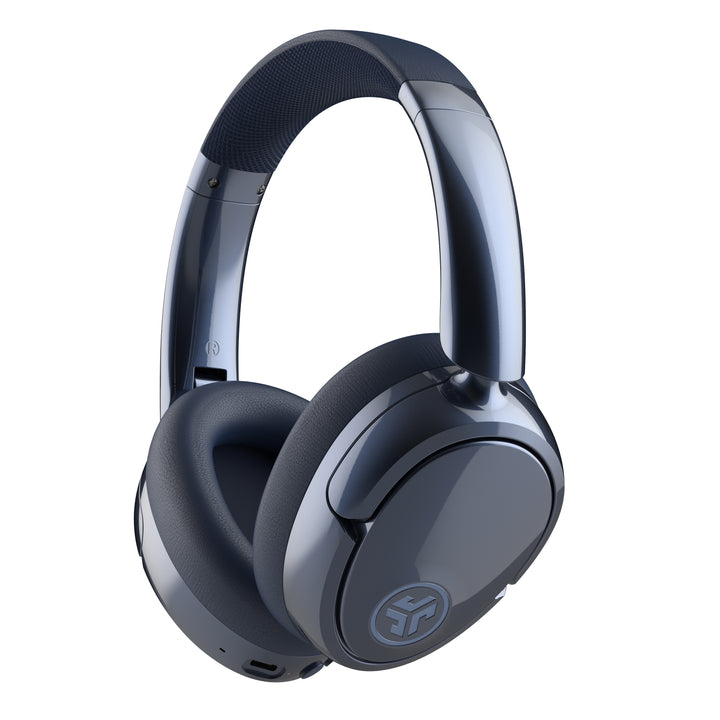
- Hybrid ANC (The JLab Enterprise Benchmark): Combines both feedforward and feedback microphones connected to a dedicated dual-core audio DSP. By processing external ambient acoustic data simultaneously with internal cavity acoustics, JLab Over Ear ANC Headphones achieve up to 42 dB of active attenuation across a broad bandwidth (20Hz - 2000Hz), suppressing low-frequency engine rumbles, air conditioning hums, and mid-frequency office chatter.
Comprehensive B2B Sourcing Comparison: Technical Benchmarks Across Headphone Categories | Evaluation Metric | Basic ANC Headphones | Mid-Tier Commercial ANC | JLab Flagship Over Ear ANC |
| Noise Attenuation Depth | -15 dB to -22 dB (Feedforward) | -25 dB to -32 dB (Feedback) | -35 dB to -42 dB (Hybrid Digital ANC) |
| Driver Configuration | 30mm Mylar Diaphragm | 40mm PET Dynamic Driver | 40mm Titanium-Coated Neodymium Transducer |
| Codec Support | SBC Only | SBC, AAC | SBC, AAC, LDAC, LC3 (LE Audio Ready) |
| Battery Playtime (ANC ON) | 15 - 20 Hours | 25 - 35 Hours | 45 - 50 Hours (70 Hours with ANC OFF) |
| Ear Cushion Material | Standard Polyurethane Foam | High-Density Sponge | Cloud Foam Memory Cushion + Breathable Eco-Leather |
| Microphone System | Single Omni Microphone | Dual Mic with Basic Noise Suppression | Multi-Mic Array with C3 Clear Voice ENC DSP |
| Regulatory Compliance | Basic CE/FCC | CE, FCC, RoHS | FCC, CE, RoHS, REACH, PSTI, UN38.3, MSDS |
2. Acoustic Driver Dynamics & Spatial Resonance
A noise-cancelling earphone is only as good as its passive acoustic foundation. JLab engineers design acoustic chambers that optimize air volume behind the 40mm dynamic driver. By utilizing high-flux neodymium magnets and lightweight titanium polymer membranes, our headphones preserve audio fidelity even when heavy ANC inverted phase waves are generated by the DSP. This eliminates the "cabin pressure" feeling commonly reported in inferior active noise cancelling headphones.
3. Battery Architecture & International Shipping Compliance
For global supply chains, battery safety and compliance documentation are mandatory. Bulk shipments of lithium-polymer battery-powered devices face stringent transportation regulations under IATA and IMO guidelines. Every JLab Over Ear ANC Headphone product family carries comprehensive test reports including UN38.3 (lithium battery transportation safety), Material Safety Data Sheets (MSDS), 1.2-meter drop test certifications, and cell protection circuit validation (IEC 62133). This ensures frictionless customs clearance across North American, European, Asia-Pacific, and Latin American ports of entry.