
Choosing a China-based supplier for Kids Volume Limited Headphones takes more than comparing prices and product photos. Buyers should examine how volume limits are measured, whether performance stays consistent across devices, and how each model fits smaller heads. Ask for test reports, sample units, material details, and clear quality-control procedures. Then try the headphones in a real setting. A limit printed on a box is not the whole story.
Dr. Shelly Chadha, a World Health Organization technical officer for ear and hearing care, has warned: “Millions of teenagers and young people are at risk of hearing loss due to the unsafe use of personal audio devices.” That concern makes careful product evaluation worthwhile. For this supplier overview, we will consider design, comfort, durability, communication, and evidence behind volume-limiting claims. Look closely at the hinge, cable or wireless controls, and the feel of the ear cushions after extended wear. Small details matter.
Not every supplier presents information in the same way. Some claims may be difficult to compare. That is a useful caution, not a reason to dismiss every manufacturer. A thoughtful shortlist should distinguish documented capabilities from marketing language and identify questions buyers still need answered. The strongest candidate may not be the cheapest. Nor is one sample enough to prove consistent production. This guide offers a practical starting point for comparing China’s Kids Volume Limited Headphones suppliers with care.
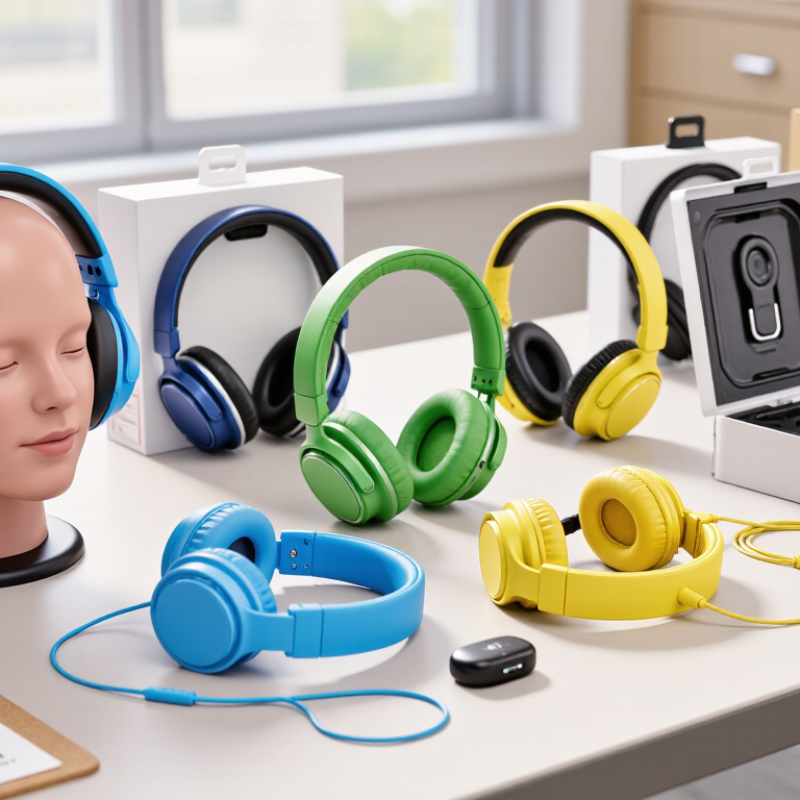
A reliable China-based kids’ volume-limited headphone supplier can explain how its limit is designed, tested, and checked in production. Volume control should be an engineered feature, not just a label on the package. Ask for test reports showing output measurements under stated conditions, and compare them with a production sample. Fit, connected devices, and test setup can affect results.
Look beyond the limit itself. A well-prepared supplier should provide clear material specifications, cable and hinge durability checks, and records that link samples to production batches. During evaluation, inspect small details: smooth earcup edges, flexible headbands, and buttons children can operate without force. Request answers from the engineering or quality team, not only a sales representative. Specific answers matter.
Communication is part of the product. Suppliers should report design changes, explain inspection methods, and flag problems rather than quietly replacing components. Ask how they handle inconsistent measurements and what happens when a batch fails internal checks. Some suppliers may have attractive documents but limited testing depth; a factory visit or independent sample assessment can reveal gaps. No single document proves long-term performance, and buyers should verify claims against their own requirements.
Supplier comparison framework. The profiles below describe common manufacturing and sourcing options, not ranked or named companies. Specifications and compliance claims should be confirmed for each product and production batch.
| Supplier profile | Volume-limiting approach | Typical product focus | Customization scope | Evidence to request | Best suited for |
|---|---|---|---|---|---|
| OEM headphone factory | A fixed output cap implemented in the audio circuit or product design; a commonly requested target is 85 dB, subject to the specified test method and measurement conditions. | Wired or wireless over-ear and on-ear models for children. | Color, packaging, cable, controls, and logo application; hardware changes may require a new sample and validation. | A model-specific acoustic test report, defined test setup, sample identification, and production quality-control records. | Buyers with a clear design and specification who need contract manufacturing. |
| ODM product developer | May offer a preset limited-output design or develop a product around a buyer-defined limit; confirm whether the cap is fixed or user-adjustable. | Ready-to-adapt designs, often including wired, Bluetooth, or folding options. | Usually offers more design choices than a standard OEM order, depending on tooling, electronics, and order requirements. | Design revision history, limit-setting details, acoustic results for the final configuration, and confirmation that production matches the approved sample. | Brands or distributors seeking a differentiated product without developing every component from scratch. |
| Acoustic-testing-focused manufacturer | Can specify and test output under stated conditions. A volume limiter should be evaluated on the complete headphone-and-source setup, not inferred from a marketing label alone. | Products where documented sound-output performance is a key purchasing requirement. | May support testing across different drivers, source devices, firmware, or limiter settings. | Test method and equipment, source signal and device, measurement results, tolerances, and any applicable EN 50332 report or assessment. | Buyers who need stronger technical documentation and repeatable verification. |
| Education-oriented supplier | May provide a fixed output limit alongside classroom-oriented controls; request test data for the exact model and connection mode. | Wired headsets or headphones designed for shared-device and learning environments. | May include microphone options, replaceable parts, device compatibility, and school-oriented packaging. | Compatibility list, durability test details, material declarations, and applicable product-safety documentation for the destination market. | Schools, education distributors, and institutional purchasers. |
| Check | What to confirm | Why it matters |
|---|---|---|
| Meaning of the dB limit | Ask whether the stated figure is a measured maximum sound pressure level, a nominal target, or a limiter setting, and request the measurement conditions. | Sound output can vary with the source device, audio signal, fit, and test setup. A stated “85 dB” value alone is not a complete test specification. |
| Standards and test reports | Check whether EN 50332 is relevant to the product and market, and verify the report covers the exact model and configuration. It provides test methods for sound pressure levels in personal music systems; applicability should be assessed for the product. | Standards references and reports should not be treated as interchangeable with a general claim of “safe for children.” |
| Market-specific compliance | Identify the destination market and request applicable documentation, such as relevant electrical, chemical, radio, or toy-safety assessments where required. | Requirements depend on product design, intended use, and sales destination; one certificate does not automatically cover every market. |
| Batch consistency | Agree on an approved reference sample, incoming and final inspection criteria, and how limiter performance will be checked during production. | The production item should match the tested and approved configuration. |
Note: An 85 dB limit is a common product specification, not a universal guarantee of hearing safety. Confirm the intended use, actual output, applicable local requirements, and supporting test evidence before purchase.
Ask how the volume limit is designed, measured, and checked during production. Compare the test report with a sample. Small details count.
It is a weekly exposure guide, not a guarantee that every session is harmless. Louder listening uses that allowance faster. Quiet breaks help.
Not always. Playback devices, software, fit, and recordings can affect the sound reaching a child’s ears. Ask how testing covers compatible devices.
It should identify the headphone model, source device, settings, test conditions, and measured output. Calibration records add useful detail. A summary alone may leave questions.
EN 50332 concerns sound pressure from personal music systems and headphones. IEC 62368-1 addresses broader hazards, including electrical, thermal, and mechanical risks. They are not interchangeable.
Check smooth earcup edges, a flexible headband, durable hinges, and buttons children can press easily. Inspect the cable and ear pads, too. Not quite perfect? Record what feels uncertain.
Request material specifications, durability records, and batch-linked inspection documents. Ask how design changes are reported and what happens when a batch fails checks.
Monitor listening time and encourage regular breaks. On a noisy bus, a child may raise the volume without noticing. A specification sheet cannot show every real-world habit.
Choosing reliable Kids Volume Limited Headphones suppliers in China requires more than comparing prices. Buyers should assess how each supplier designs and verifies volume controls, including whether testing confirms a consistent output limit across different devices and listening conditions. The WHO–ITU 75 dB, 40-hour benchmark can serve as a useful reference for child-focused listening design, while product checks should examine limiter accuracy, sound quality, durability, and performance after repeated use.
Before placing an order, review relevant test reports and certification documentation, and ask how EN 50332 and IEC 62368-1 apply to the product and its compliance checks. Also evaluate the supplier’s OEM and ODM capabilities, communication, quality-control process, production capacity, and ability to support sample reviews and repeat orders. A careful assessment helps buyers select products that meet defined safety and performance requirements while fitting their market and supply needs.