
Portable Bluetooth Speakers have moved from occasional travel gear to familiar household companions. They sit beside kitchen sinks, ride in backpacks, and bring sound to patios where power outlets are scarce. Their appeal is practical. A phone pairs quickly, music follows outdoors, and one compact device can serve several settings.
Mark Powell, former executive director of the Bluetooth Special Interest Group, has spoken about Bluetooth’s role in making wireless connections useful. A concise paraphrase of that idea is: “Wireless technology earns its place when connection feels simple and dependable.” Convenience matters. A speaker that takes several menus to connect will often stay unused. Battery life, clear controls, sturdy construction, and balanced sound matter as much as advertised volume. These details are easy to overlook in a product comparison.
The popularity of Portable Bluetooth Speakers also reflects changing habits. People want audio for cooking, small gatherings, workouts, and quiet listening in a hotel room. A palm-sized model can make a podcast audible over running water; a larger one may fill a garden without a complicated setup. Still, portability has trade-offs. Smaller cabinets cannot reproduce deep bass like larger systems, and battery performance varies with volume, age, and use. That part gets glossed over.
This outline examines the features, everyday uses, and design choices behind the category’s rise. It also considers where enthusiasm can outrun reality. The best speaker is not always the loudest or most expensive. It is the one that fits the listener’s space, routine, and expectations—though those expectations are not always easy to define.
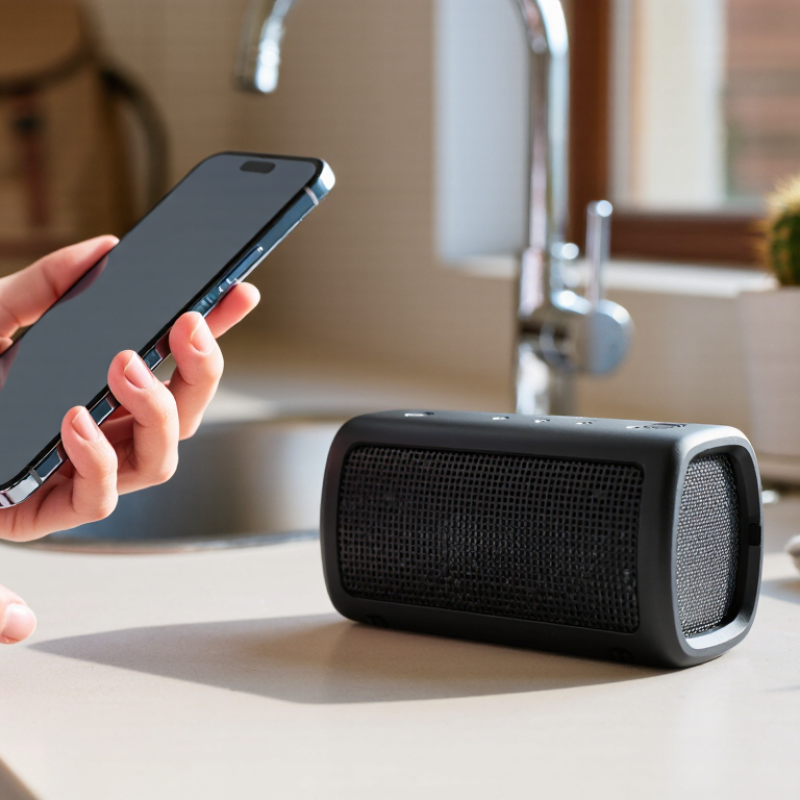
A portable Bluetooth speaker is a compact audio device with its own speaker drivers, amplifier, battery, and wireless receiver. It connects to a phone, tablet, or computer over Bluetooth, so music can play without a cable between devices. Many models also accept a wired input or charge through a USB port. The basic idea is simple: sound travels from a device to the speaker through a short-range radio connection. No home stereo required.
Portability means more than a small size. A useful speaker is light enough to carry, has a battery suited to the outing, and can handle ordinary bumps or a little dust. On a picnic table, for example, it can play from a nearby phone while people move around. Keep the phone within a reasonable range; walls and other obstacles may interrupt the connection. Battery life also varies with volume, age, and temperature, so advertised hours are not a promise for every situation. Small speakers can sound surprisingly full, but they cannot always reproduce deep bass or fill a large room evenly. That trade-off is easy to overlook.
A portable speaker is convenient, not magic.
Bluetooth connectivity removes the cable between a phone and a portable speaker, making it easy to carry music from a kitchen counter to a backyard table. Pairing usually takes only a few taps: select the speaker in the phone’s Bluetooth settings, then start playback. No cable needed. Once connected, the phone sends digital audio through short-range radio signals, and the speaker turns those signals into sound. The phone can stay in a pocket or on a nearby shelf, which keeps the setup simple while cooking, packing, or relaxing outdoors.
The connection has limits. Walls, distance, and nearby wireless devices can weaken the signal or cause brief interruptions. A listener might hear a song pause when walking too far down the garden path. That can be frustrating. It is easy to blame the speaker, though the phone’s position or a crowded signal environment may be part of the problem. Bluetooth audio may also be compressed, depending on the devices and settings, so a wireless connection does not guarantee identical sound in every setup. Battery life matters, too: the phone and speaker both need power during longer listening sessions. For everyday use, the practical trade-off is clear—fewer cables and quick playback, with occasional limits worth noticing.
Bluetooth lets speakers play audio wirelessly from a nearby phone or other device. Nominal range varies by Bluetooth power class; walls, interference, and device design can reduce the actual range.
Nominal ranges shown are approximate, not guaranteed operating distances. Portable speakers commonly use short-range Bluetooth connections.
Portable Bluetooth speakers fit easily into routines that rarely stay in one place. A compact unit can move from a kitchen counter to a picnic blanket without a cable trailing behind. Bluetooth SIG’s 2024 Market Update forecasts 7.5 billion Bluetooth device shipments annually by 2028. That figure covers many device types, not speakers alone, but it reflects how widely the connection standard is used.
Easy handling matters just as much as size. A built-in handle, grippy edges, and buttons you can find by touch make a speaker simpler to use outdoors. USB-C charging can reduce the number of cables in a travel bag. A water-resistance rating also helps near a sink or pool, though it does not make every speaker suitable for submersion. Check the rating before relying on it.
Battery life changes how freely people can carry a speaker. For a short walk, a few hours may be enough; for a long afternoon, it is not. Lightweight designs are easier to pack, but smaller cabinets can limit bass and volume. That trade-off is easy to overlook in a product listing. In practice, clear controls and a stable connection may matter more than one extra feature.
Portable Bluetooth speakers appeal to people because they fit around routines instead of demanding a dedicated listening space. A student can carry one from a desk to a shared kitchen, then lower the volume during a late study session. A cook may set one beside the counter and follow a podcast over running water. Families often use a speaker for a picnic, where one device is easier to manage than several phones. No complicated setup. These small conveniences make music available in ordinary moments. Different users value different things: clear speech, stronger bass, simple controls, or a shape that slips into a bag.
For outdoor users, weight and battery life may matter more than impressive specifications. A short walk can call for a compact speaker; a long day outside may justify a larger one. Water resistance can add confidence near splashes, though it does not mean every device can be submerged. At home, listeners may care more about balanced sound at low volume. Portability also involves compromise: tiny speakers can sound thin in a large room, while powerful models take up space. It is tempting to assume one model suits everyone. It does not. Buyers can compare their actual listening habits, while remembering that those habits may change after purchase.
| User group | Common listening situation | Features that appeal | Practical benefit | Trade-off to consider |
|---|---|---|---|---|
| Home listeners | Moving music between rooms, listening in the kitchen, or relaxing outdoors at home | Wireless playback, compact size, simple setup, and built-in rechargeable battery | Music can follow the listener without requiring a fixed stereo setup or nearby power outlet | Small speakers may provide less bass and stereo separation than larger home audio systems |
| Commuters and travelers | Hotel rooms, campsites, picnics, and other trips where shared audio is useful | Lightweight construction, carrying loop or handle, and battery-powered operation | Provides a convenient way to play audio without carrying a full-size speaker system | Travelers still need to manage charging, packing space, and local rules about noise |
| Outdoor and active users | Backyards, parks, beaches, and recreational activities | Durable housing, water-resistance rating on some models, and easy-to-clean surfaces | Some designs are better suited to splashes, dust, or everyday bumps than indoor-only speakers | Water resistance varies by model; it does not automatically mean the speaker can be submerged |
| Students and shared households | Study breaks, dorm rooms, small gatherings, and shared living spaces | Compact footprint, Bluetooth pairing, and straightforward controls | Can be moved or stored easily and does not require a complicated installation | Bluetooth range and connection stability can be affected by distance and physical obstacles |
| People who enjoy podcasts and spoken audio | Listening to podcasts, audiobooks, radio streams, or video audio around the home | Quick connection to a phone, tablet, or computer and convenient volume controls | Spoken audio can be played at a comfortable distance from the listener instead of through headphones | Bluetooth audio usually depends on a compatible source device and may introduce a small delay |
| Hosts and small-group listeners | Casual get-togethers, shared meals, and small social events | Portable placement, room-filling sound for a compact space, and simple wireless playback | Music can be shared without setting up multiple components or connecting long cables | Maximum volume and sound coverage are limited compared with dedicated event sound systems |
This table describes common use cases and product characteristics; individual performance, battery life, durability, and water resistance vary by model.
At home, a portable speaker can move from the kitchen counter to the balcony without rewiring anything. In a small room, place it on a stable shelf, not inside a cupboard. Enclosed spaces can muffle vocals and make bass sound boomy. For a shared meal, moderate volume keeps conversation comfortable. Small details matter.
On a picnic or campsite, a speaker adds music without requiring a power outlet, but battery life deserves a quick check before leaving. Keep it out of loose sand and away from splashes unless its product rating supports those conditions. A shaded spot also helps prevent overheating in direct sun. Outdoors, sound disperses quickly, so placing the speaker near listeners is usually more useful than turning it up sharply.
At a desk, a compact speaker can make calls or background music easier to hear. Keep it a little away from the computer’s microphone to reduce echo, and lower the volume during calls. Bluetooth range varies with obstacles; thick walls may interrupt a connection. It is tempting to assume louder is always better, but it can drain the battery faster and tire nearby listeners. People sometimes forget to charge the speaker after using it, which makes portability less helpful the next day. That small oversight is easy to fix, though not always remembered.
A built-in handle, grippy edges, and light weight help on walks and picnics. USB-C charging can reduce cable clutter in a travel bag.
Read its water-resistance rating before using it near a sink or pool. Water resistance does not always mean it can be submerged.
A few hours may suit a short walk, while a longer outdoor day calls for more battery life. I sometimes forget to recharge mine.
They are easier to pack, but small cabinets can limit bass and volume. A compact speaker may sound thin in a large room.
Set it on a stable shelf, rather than inside a cupboard, where sound may become muffled or boomy. Small details matter.
Place it near listeners instead of turning it up sharply. Keep it shaded, and check its rating before exposing it to sand or splashes.
Keep the speaker a little away from the computer microphone and lower its volume during calls. Thick walls may interrupt Bluetooth connections.
Students may want simple controls, while cooks may value clear speech over running water. One model will not suit everyone, and habits can change after purchase.
Portable Bluetooth Speakers are compact audio devices that play sound wirelessly from compatible phones, tablets, and other devices. Bluetooth connectivity makes listening convenient by removing the need for an audio cable, while simple pairing and easy-to-use controls help users start, pause, and adjust playback with little effort. Their portable design often includes a lightweight body, a built-in rechargeable battery, and a shape that is easy to carry, making them useful at home or on the go.
These speakers appeal to a wide range of people because they offer a practical way to enjoy music, podcasts, and other audio in different places. A listener might use one while relaxing at home, working, gathering with friends, or spending time outdoors. Their combination of wireless convenience, portability, and straightforward operation makes them a flexible audio choice for everyday activities.