
Precision-engineered directivity tools for broadcasting, location recording, livestreaming, and cinema production.
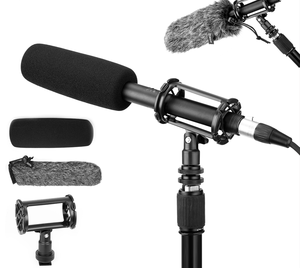
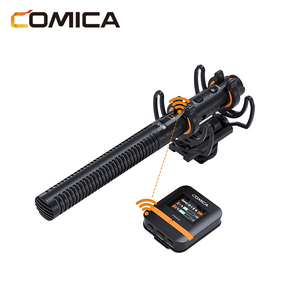
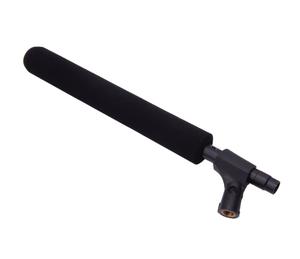
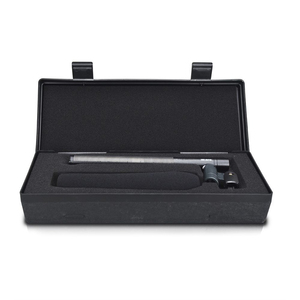
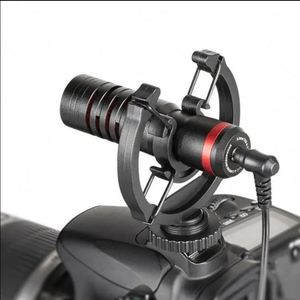
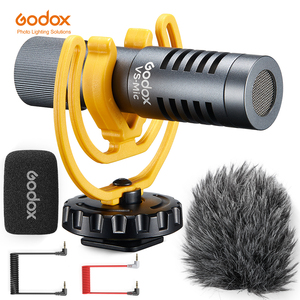
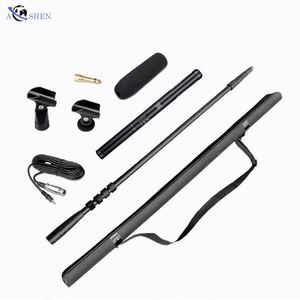
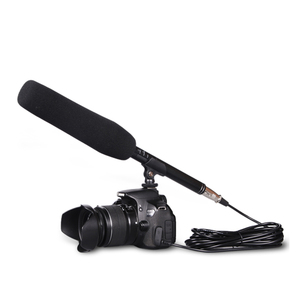
A comprehensive analysis of acoustic engineering, CE compliance standards, and supply chain verification for international buyers.
The global professional audio market is undergoing a structural transition. Demand for high-directivity shotgun microphones—historically confined to Hollywood sound stages and broadcast ENG (Electronic News Gathering) vans—has expanded aggressively into commercial content production, independent filmmaking, remote broadcast infrastructure, and hybrid event streaming. For B2B procurement managers, brand owners, and electronics distributors, sourcing from verified CE certified shotgun microphones factories & suppliers is no longer merely a regulatory checkbox; it is a fundamental pillar of risk mitigation, audio consistency, and market credibility.
In electroacoustic manufacturing, shotgun microphones present unique technical challenges compared to standard studio condensers or omnidirectional dynamic mics. Achieving high off-axis attenuation without inducing extreme phase distortion requires micro-precision machining of acoustic interference tubes, exact diaphragm tensioning, and robust RF shielding against wireless interference (5G, Wi-Fi 6E, and UHF bodypacks). This whitepaper establishes the procurement benchmarks necessary to evaluate factory capabilities, compliance documentation, and long-term production stability.
Core Procurement Insight: CE certification for shotgun microphones encompasses not only basic electrical safety, but rigorous Electromagnetic Compatibility (EMC Directive 2014/30/EU) and, where applicable, Radio Equipment Directives (RED 2014/53/EU) for integrated 2.4GHz/UHF wireless transmission modules.
To evaluate a supplier's engineering strength, procurement officers must understand how interference tube design dictates acoustic behavior. A shotgun microphone achieves its narrow pickup angle (supercardioid or lobar polar patterns) through phase cancellation within its forward-facing slotted tube:
Laser-milled phase slots ensure identical slot impedance along the tube, eliminating erratic off-axis comb filtering.
Advanced factories employ RF bias capsule topologies or hydrophobic moisture-proof coatings for high-humidity outdoor shoots.
Integrated low-noise FET preamps ensure maximum dynamic range when pairing with mirrorless cameras or professional mixers.
When importing pro audio equipment into the European Economic Area (EEA) and global markets recognizing CE standards, buyers must verify that factories hold authentic, accredited test reports issued by ISO/IEC 17025 accredited laboratories (e.g., SGS, TÜV, Intertek). CE compliance for shotgun microphones spans three main technical directives:
Condenser capsules and internal step-up circuitry are highly susceptible to radio frequency interference (RFI) from mobile phone towers, LED lighting ballasts, and wireless transmitters. CE EMC testing verifies compliance under EN 55032 (Emissions) and EN 55035 (Immunity). Key verification checkpoints include:
For modern hybrid units—such as wireless shotgun systems (e.g., COMICA VM40)—compliance shifts to the RED framework. This guarantees that internal 2.4GHz FHSS or UHF transmitters do not exceed spectral power limits, cause adjacent channel interference, or violate local spectrum allocation guidelines.
Tier-1 factories mandate that all structural metals (anodized aluminum alloys, brass phase tubes), PCB solder joints (lead-free SAC305 alloy), capsule diaphragms, and acoustic foam windscreens adhere to RoHS Directive 2011/65/EU with amendment (EU) 2015/863, restricting heavy metals (Pb, Cd, Hg, Cr VI) and phthalates.
A side-by-side technical evaluation model for tier selection across professional broadcast, DSLR audio, and wireless livestreaming categories.
| Category Tier | Transducer & Capsule | Polar Pattern | Self-Noise (dBA) | Max SPL (1% THD) | CE Certification Scope | Primary Target Market |
|---|---|---|---|---|---|---|
| Broadcast Short Shotgun (e.g., MKH416 Style) | True Condenser / RF Bias | Supercardioid / Lobar | ≤ 12 dBA | 130 – 135 dB | EMC 2014/30/EU, RoHS 3 | Film Production, Broadcast TV, Boom Pole Recording |
| Wireless Hybrid Shotgun (e.g., VM40 Series) | Electret Condenser + 32-Bit Float | Supercardioid | ≤ 15 dBA | 120 – 128 dB | RED 2014/53/EU, EMC, LVD | Eng Field Journalism, Mobile Video, Independent Creators |
| Professional Wired DSLR (e.g., BY-BM6060) | Back-Electret Condenser | Supercardioid | ≤ 18 dBA | 125 – 130 dB | EMC Directive, EN 55032/35 | Commercial Videography, Documentary, Studio Dialogue |
| Compact On-Camera Mic (e.g., VS-Mic Series) | Miniature Electret Capsule | Cardioid / Hypercardioid | ≤ 20 dBA | 115 – 120 dB | EMC Directive, REACH | Vlogging, Mobile Phone Content, Backup Audio |
Strategic technology roadmaps shaping OEM/ODM factory investments over the next half-decade.
Integration of dual-ADC preamps allowing zero-gain-staging capture directly inside the microphone chassis, eliminating digital clipping during unpredictable sound spikes.
Modernized internal architecture featuring built-in high-resolution DACs (24-bit/96kHz) alongside traditional analog balanced XLR outputs for universal device connectivity.
Transition from traditional brass/machined aluminum to aerospace-grade carbon fiber tubes, reducing boom pole operator fatigue by up to 40% while preserving structural resonance damping.
Selecting an acoustic factory requires evaluating parameters beyond unit price. Professional buyers should perform audit protocols across three critical dimensions:
A qualified manufacturer must maintain an in-house full-anechoic acoustic chamber equipped with calibrated measurement systems (e.g., Audio Precision, Listen SoundCheck, or Brüel & Kjær analyzers). Request factory-generated frequency response charts, 360° polar pattern polar plots, and equivalent self-noise measurements before finalizing sourcing agreements.
Micro-diaphragm capsules require strict humidity and particle control. Leading suppliers utilize Class 10,000 cleanrooms for capsule assembly and automated surface-mount technology (SMT) for mainboards, ensuring low component tolerances and minimal unit-to-unit variation.
Traceability guarantees that every raw material lot—from copper wiring inside transformers to internal shock mount silicon—can be traced back to original material batch certifications, preventing silent component substitution during full-scale mass production.
Expert responses to critical compliance, acoustic, and logistics queries for international audio buyers.
For wired shotgun microphones, suppliers must provide an official CE Declaration of Conformity (DoC) backed by test reports for the EMC Directive (EN 55032 for emissions and EN 55035 for immunity) and RoHS 3 compliance (IEC 62321). If the microphone features integrated wireless receivers or 2.4GHz/UHF transmitters (e.g., COMICA VM40), the supplier must also supply Radio Equipment Directive (RED 2014/53/EU) test reports covering spectrum efficiency (EN 300 328) and human RF exposure (EN 62479).
The length of the interference tube directly determines off-axis sound cancellation capabilities. A longer tube (e.g., 30–40 cm) introduces greater phase cancellation delays, maintaining tight lobar directivity into lower frequency bands (down to 200 Hz). However, longer tubes are more susceptible to acoustic phase comb filtering in small, reverberant indoor spaces. Short shotgun microphones (15–20 cm) provide a balanced supercardioid pattern optimal for indoor dialog capture and run-and-gun camera mounting.
True condenser shotgun microphones utilize externally polarized capsules requiring full 48V phantom power. They deliver lower self-noise floor (< 12 dBA), higher sensitivity, and wider dynamic range, making them the standard for feature films and high-end broadcasting. Back-electret capsules utilize a permanently charged diaphragm, allowing them to operate on lower voltage (battery power or 1.5V–5V plug-in power). Modern high-tier electrets offer excellent performance for DSLR videography and commercial streaming at a lower OEM price point.
Under an OEM model, buyers select existing factory acoustic designs (housing mold, PCB layout, capsule spec) and customize external elements such as laser-engraved logos, anodized body colors, custom foam wind protection, packaging artwork, and user documentation. In an ODM project, the factory co-engineers custom interference tube geometries, proprietary DSP noise-reduction algorithms, custom PCB layouts, and bespoke tooling from scratch. Typical OEM lead times range from 30 to 45 days, whereas full ODM development requires 90 to 180 days.
Condenser capsules can suffer from "crackling" or severe signal dropouts when ambient humidity condensation creates conductive paths across the high-impedance capsule backplate. Tier-1 factories mitigate this by applying hydrophobic conformal coatings to internal PCBs, utilizing gold-evaporated Mylar diaphragms, and implementing RF bias circuitry (which operates at low impedance and remains virtually immune to moisture condensation).
Robust RF shielding is achieved through continuous metal enclosure design (machined aluminum alloys or solid brass chassis), Gold-plated 3-pin XLR contacts, discrete RF suppression chokes on signal lines, and grounding the chassis directly to Pin 1. Factory validation includes subjecting operating microphones to high-power RF field generators across 800 MHz to 5.8 GHz frequency ranges within shielded EMC chambers.
Streamline your pro audio supply chain. Request OEM/ODM technical specifications, factory audit documentation, sample units, and wholesale pricing tiers today.