
Explore our flagship lineup of medical-grade OTC hearing enhancement devices, wireless sound transmitters, acoustic receivers, and studio-grade components manufactured in high-precision facilities.
Navigating the regulatory convergence of consumer audio electronics and medical-grade acoustic amplification in China's manufacturing ecosystem.
The global hearing health industry is experiencing an unprecedented structural transformation. Driven by the United States Food and Drug Administration (FDA) OTC Hearing Aid Final Rule and equivalent regulatory frameworks across Europe and the Asia-Pacific region, over-the-counter (OTC) hearing aids have bridged the gap between expensive clinical prescription hearing instruments and mass-market true wireless stereo (TWS) earbuds. For international buyers, brand owners, retail chains, and medical device distributors, sourcing from China’s leading OTC hearing aid manufacturers represents a strategic opportunity to capitalize on high-margin, scalable acoustic technology.
China has firmly established itself as the world’s premier hub for advanced electroacoustic engineering. By integrating silicon-level DSP chip design, medical-grade silicone injection molding, automated surface-mount technology (SMT), and rigorous electroacoustic chamber testing, top Chinese OTC hearing aid manufacturers provide turn-key OEM/ODM solutions. This guide provides corporate procurement directors and product managers with an authoritative evaluation of technical parameters, manufacturing workflows, quality assurance systems, and future procurement strategies.
Why technical performance metrics dictate commercial success in the OTC hearing aid market.
Utilizing 16, 32, or 64 independent frequency compression channels, Wide Dynamic Range Compression amplifies soft speech sounds while suppressing uncomfortably loud environmental noises, tailored specifically for mild-to-moderate sensorineural hearing loss profiles.
Deep Neural Network (DNN) acoustic algorithms classify listening environments in real time (e.g., quiet room, noisy restaurant, outdoor traffic) and apply dynamic spectral subtraction to isolate voice frequencies while minimizing background chatter and wind noise.
Next-generation Bluetooth Low Energy Audio provides dual-mode connectivity: seamless streaming of phone calls and media directly from iOS and Android smartphones alongside low-power Auracast broadcast audio reception in public arenas.
Top Chinese manufacturers design and audit OTC hearing aids according to rigorous medical electroacoustic metrics:
| Acoustic Parameter | FDA/ANSI Benchmark standard | Tier-1 China Factory Performance | Clinical/User Impact |
|---|---|---|---|
| Maximum OSPL90 (Output Peak) | ≤ 111.2 dB SPL (Bandpass limit) | 105 dB SPL - 109 dB SPL (±3dB) | Prevents acoustic trauma while protecting residual hearing bandwidth. |
| Full-On Gain (HFA-FOG) | 25 dB to 45 dB SPL target range | 30 dB – 40 dB adjustable gain curve | Delivers targeted amplification tailored for mild-to-moderate hearing loss. |
| Total Harmonic Distortion (THD) | < 5% across test frequencies | ≤ 1.5% at 500Hz, 800Hz, and 1600Hz | Ensures crystal-clear speech acoustics without metallic distortion. |
| Equivalent Input Noise (EIN) | ≤ 32 dB SPL threshold | ≤ 22 dB SPL ultra-quiet floor | Eliminates internal electronic hiss and circuit background noise. |
| Latency (Processing Delay) | < 15 milliseconds | 6.5 ms – 9.0 ms ultra-low delay | Eliminates comb-filtering and echo effects between natural and amplified sound. |
Analyzing strategic shifts in design, self-fitting software, battery chemistry, and regional regulatory compliance.
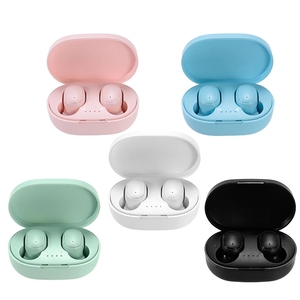
The boundary between high-end TWS consumer earbuds and medical OTC hearing aids is dissolving rapidly. Modern consumers demand sleek, non-stigmatizing form factors such as RIC (Receiver-in-Canal) or slick In-Ear Pod designs. Tier-1 Chinese manufacturers are leading this shift by combining consumer earbud aesthetics with medical-grade acoustic performance, enabling brands to market hearing enhancement as a lifestyle wellness device.
Future-ready OTC hearing aids eliminate the requirement for audiologist office visits. Leading OEM/ODM partners now provide customizable iOS and Android SDKs featuring built-in pure-tone air-conduction threshold tests (Audiogram self-assessment). The companion app calculates individual gain requirements across 250Hz–8000Hz and flashes tuned audiograms directly to the DSP onboard EEPROM.
Traditional zinc-air button batteries are being phased out in favor of custom lithium-ion coin cells (e.g., ZeniPower or Varta form factors) integrated with wireless magnetic charging cases. Chinese manufacturers are deploying low-power fast-charging chipsets that yield 20+ hours of continuous hearing aid runtime from a 45-minute charge cycle, backed by IP67 sweat and moisture protection.
Regulatory readiness is the primary differentiator for B2B suppliers. High-caliber factories in Shenzhen, Dongguan, and Suzhou maintain pre-registered FDA 510(k) clearances, ISO 13485 QMS certification, EU CE MDR Class IIa compliance, and FCC/ROHS/REACH approvals, allowing global importers to drastically compress time-to-market.
Our vertically integrated manufacturing infrastructure ensures uncompromising quality from silicon wafer to finished medical packaging.
Operating Class 100,000 dust-free medical assembly cleanrooms. Every OTC hearing aid is assembled under stringent environmental controls to guarantee zero particulate contamination during acoustic transducer placement.
Utilizing Audio Precision (APx555) analyzers, Brüel & Kjær artificial ears (IEC 60318-4), and dedicated Anechoic Chambers. 100% of manufactured units undergo automated electroacoustic calibration before shipment.
From industrial ID design, micro-injection tooling, custom PCBA layout, algorithm tuning, and medical packaging customization to global regulatory registration assistance.
Critical insights for importers, brand owners, and procurement directors sourcing OTC hearing aids from China.
An FDA 510(k) cleared OTC Hearing Aid is legally regulated as a Class II medical device intended to compensate for perceived mild-to-moderate hearing impairment in adults aged 18 and older. It must satisfy strict electroacoustic thresholds (e.g., maximum output limits, total harmonic distortion, frequency response bandwidth) and software safety requirements. Conversely, a PSAP is a consumer electronics device intended solely for non-hearing-impaired individuals to amplify environmental sounds in specific activities (such as bird watching or hunting) and cannot legally be marketed as a hearing loss solution.
Top-tier Chinese manufacturers collaborate with major DSP chip vendors (such as Knowles, Bestechnic, Realtek, and custom RISC-V acoustic processors). During the SMT and final calibration phases, custom acoustic fitting targets (e.g., NAL-NL2 or DSL v5 fitting formulas) and dynamic noise suppression parameters are flashed directly into the onboard EEPROM or flash memory using automated test software.
Importers should audit facilities for ISO 13485 certification (Medical Devices Quality Management System) alongside ISO 9001. Furthermore, if exporting to the United States, the factory must be registered with the FDA as a medical device manufacturer and strictly follow 21 CFR Part 820 Quality System Regulations (QSR) / Current Good Manufacturing Practice (CGMP).
For standard white-label OTC models with customized packaging and laser-etched branding, MOQs typically range from 500 to 1,000 sets. For custom industrial design (ID), bespoke plastic injection tooling, and customized smartphone app development, baseline ODM project MOQs start at 3,000 to 5,000 units depending on technical complexity.
Yes. We provide complete software SDKs and turnkey app customization services. This includes branding customization (logo, color themes, UI design), self-fitting audiogram integration, custom EQ band adjustments, firmware over-the-air (OTA) update servers, and cloud database integration.
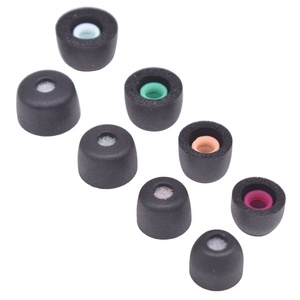
Acoustic feedback is eliminated through dual-layered protection: 1) Advanced Adaptive Phase-Inversion Feedback Cancellation algorithms executed inside the DSP, and 2) Mechanical acoustic isolation using medical-grade liquid silicone ear-tips (LSGs) and isolated receiver rubber boots that prevent internal sound leakage from receiver to MEMS microphones.
For standard inventory or basic white-label orders, lead time is approximately 2 to 3 weeks. For volume OEM orders requiring custom PCB fabrication, SMT assembly, electroacoustic calibration, and specialized medical packaging, production lead time is typically 30 to 45 business days upon sample sign-off.
Elevate your brand with market-ready, FDA 510(k) cleared over-the-counter hearing aids and advanced electroacoustic components. Contact our B2B OEM/ODM engineering team today for technical datasheets, sample evaluations, and factory audit requests.
Send an Inquiry