
Lab-tuned, certified audio systems for international B2B distributors, commercial enterprise procurement, and retail brands.
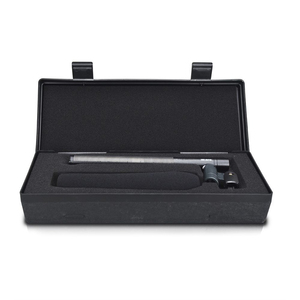
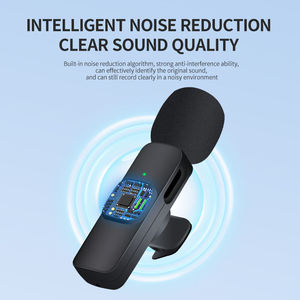
Combining California acoustic design principles with China's industrial manufacturing ecosystem to yield unmatched performance-to-cost ratios for global B2B procurement.
Navigating global radio frequency regulations requires specialized RF engineering. Chinese manufacturing hubs utilize fully shielded anechoic chambers to calibrate wireless microphones across multi-band frequencies:
The audio signal chain starts at the physical transducer and active digital signal processor. Factory production lines feature robotic automated acoustic calibration:
Enterprise buyers receive turnkey documentation assistance to guarantee smooth customs clearance and compliant market placement:
A technical matrix for procurement officers, audio engineers, and product managers evaluating wholesale wireless microphone systems for commercial deployment.
| Architecture Spectrum | Typical Operating Frequency | Latency (ms) | Transmission Distance | Primary Commercial Use Cases | B2B Sourcing Considerations |
|---|---|---|---|---|---|
| UHF Synthesized Digital | 470.000 – 937.500 MHz | < 2.5 ms | 100m – 300m (Line of Sight) | Live Broadcast, Concert Venues, Enterprise Keynotes, Theater | Requires region-specific frequency band flashing during OEM manufacturing. |
| 2.4GHz GFSK Digital | 2400.000 – 2483.500 MHz | < 5.0 ms | 30m – 80m | Vlogging, Mobile Content Creation, Hybrid Meeting Rooms, Education | Global license-free band; highly cost-effective; potential Wi-Fi congestion. |
| Bluetooth 6.0 / LE Audio | 2.4GHz ISM Band | < 15.0 ms | 10m – 30m | Smartphones, TWS Wireless Microphones, Wearable Fitness Tech | Native mobile OS pairing without external dongles; high power efficiency. |
| 5.8GHz High-Bandwidth | 5725.000 – 5850.000 MHz | < 3.0 ms | 50m – 100m | Pro-sumer Video Recording, High-Density Event Centers | Bypasses 2.4GHz interference; slightly reduced wall-penetration capability. |
| Shotgun / Wired Electret | Direct Analog XLR / 3.5mm | 0.0 ms (Zero Latency) | Cable Dependent (Up to 100m XLR) | Film Production, Boom Recording, Studio Podcast Setup | Requires moisture-proof interference tube design & P48 Phantom power support. |
In wholesale commercial microphone production, achieving an SNR above 85 dB to 105 dB separates consumer-grade toys from enterprise broadcast equipment. China's leading acoustic factories achieve these specifications through dual-stage pre-amp designs and low-noise operational amplifiers.
Furthermore, digital wireless transmitters incorporate dynamic audio companding (compressing signal before transmission and expanding upon reception) or uncompressed 24-bit/48kHz linear PCM conversion. This ensures that extreme acoustic pressure levels (SPL up to 130 dB) from live brass instruments or booming voices do not clip or introduce non-linear distortion (THD < 0.5%).
Drop-outs remain the single largest point of failure in wireless audio transmission. Modern China microphone suppliers solve signal loss through True Diversity receiving technology, utilizing two independent receiver channels and dual physical antennas.
Microprocessors continuously analyze the RF signal quality from both antennas, seamlessly switching to the stronger signal within micro-seconds without creating audible pops or audio phase cancellation. For compact dual-channel lapel systems (such as K9 and C-type wireless mics), printed PCB dipole antennas paired with smart beamforming firmware provide robust transmission even in urban environments crowded with radio signals.
Strategic insights for sourcing directorates planning inventory cycles, supply chain allocations, and product line development.
Traditional mechanical foam pop filters and basic analog high-pass filters are rapidly being augmented by hardware-accelerated neural audio processors (NPU/DSP). Future wholesale microphone models integrate edge-AI algorithms trained on thousands of acoustic noise profiles (e.g., wind noise, engine rumble, office chatter, HVAC hum).
This allows real-time isolation of human vocal formants while attenuating ambient background noise by up to 40 dB directly inside the microphone transmitter casing, eliminating the need for post-production audio cleanup.
Driven by EU standardization directives and global mobile device unification, the modern wireless microphone market has completely shifted toward cross-platform compatibility. B2B buyers now mandate single-transmitter systems that natively support lightning-fast digital audio output across iOS, Android, macOS, and Windows without driver installations.
Charging cases with integrated magnetics, auto-pairing memory chips, and pass-through USB-C phone charging during live streaming are now standard baseline requirements across all price tiers.
As virtual meetings, spatial gaming, and immersive content production expand, audio capturing devices are mirroring headphone consumption trends. Next-generation microphones incorporate multi-capsule arrays capable of recording binaural 3D spatial audio.
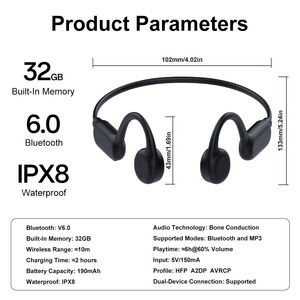
Concurrently, open-ear and bone-conduction form factors (such as IPX8 waterproof swimming and sports headsets) are expanding into dual-use devices featuring noise-canceling boom microphones for active lifestyle professionals.
Whether you are launching a private-label consumer tech line, outfitting corporate enterprise meeting spaces, or stocking regional e-commerce storefronts, partnering directly with experienced China manufacturing facilities eliminates middleman markup, guarantees strict adherence to international wireless regulations, and provides access to scalable production capacity exceeding 500,000 units per month.
Request Factory Audit & RFQEssential quality assurance milestones to verify when placing high-volume OEM/ODM audio orders in China.
Direct technical and commercial answers addressing common global importer and buyer queries.
For standard wholesale ready-to-ship catalog models, MOQs typically start as low as 50 to 100 units per model. For custom OEM branding (custom packaging, laser-engraved logos, custom colorways, and tailored firmware Bluetooth names), the standard MOQ is 1,000 units. Full ODM projects involving customized acoustic tooling and proprietary PCB designs usually begin at 3,000 units.
Experienced factories maintain region-specific firmware and hardware profiles. For North American exports, wireless frequencies are locked into FCC-compliant bands (such as 470-608 MHz / 614-698 MHz for UHF or standard 2.4GHz). For European exports, systems are programmed to adhere to CE RED harmonized band limits (e.g., 863-865 MHz or 2.4GHz ISM). Detailed spectrum test reports are provided prior to shipment.
2.4GHz Digital Systems operate on a globally license-free frequency band, offer automatic pairing, compact receiver dongles, and are highly portable—ideal for vlogging, mobile live-streaming, and small conference rooms. UHF Systems penetrate physical obstacles better, support significantly longer transmission distances (up to 300 meters), offer superior multi-channel scalability without spectrum crowding, and are preferred for professional stage, broadcasting, and large venue applications.
Yes. Factory acoustic engineers can modify the onboard DSP firmware parameters to emphasize specific frequency ranges. For instance, microphone sensitivity can be focused on human vocal frequencies (300 Hz – 3.4 kHz) while applying aggressive roll-off slopes for ambient sub-bass noise (below 100 Hz), perfect for outdoor broadcast or noisy workplace environments.
Standard enterprise orders include a 12 to 24-month factory warranty against manufacturing defects. For high-volume importers, factories typically provide a 1% to 2% spare unit allowance (FOC - Free of Charge) or spare key components (such as replacement capsules, charging cables, windshields, and clips) alongside the primary container shipment to facilitate instant local warranty replacements.
Pre-production sample verification and customized artwork approval take approximately 7 to 10 days. Mass production lead time for standard bulk orders is generally 25 to 35 calendar days from deposit receipt and sample sign-off. Repeat orders benefit from pre-allocated component stocking, reducing turn-around time to 15 to 20 days.
Get factory-direct wholesale pricing, request customized product samples, or schedule a virtual audit of our acoustic testing and assembly facilities.