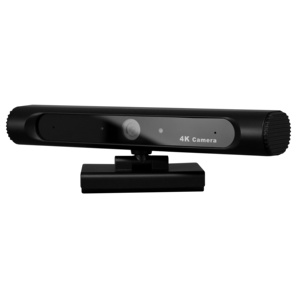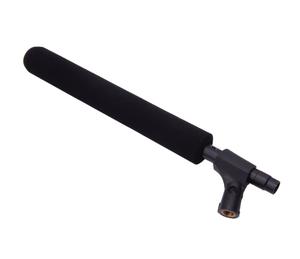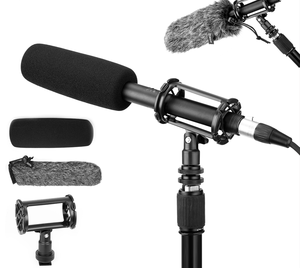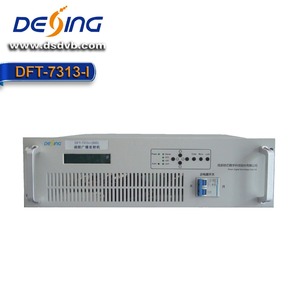
Explore our industrial-grade acoustic products, audio transmitters, desktop capture systems, and OEM headset accessories.
An in-depth evaluation of edge computing, acoustic DSP innovations, and machine learning models shaping next-generation cross-border speech conversion.
The global market for smart translation hardware is transitioning rapidly from full cloud dependence to hybrid Edge-Cloud computing architectures. Traditional translation earbuds suffered from latency penalties (often exceeding 1.5 to 3.0 seconds) due to round-trip data transmission between local microcontrollers, mobile apps, and cloud-hosted Automatic Speech Recognition (ASR) engines.
Modern OEM translation earbud specifications integrate low-power Neural Processing Units (NPUs) directly into the Bluetooth System-on-Chip (SoC). This allows real-time local processing of core languages (English, Mandarin, Spanish, French, German) with sub-150ms voice activity detection (VAD). Cloud engines are leveraged only for complex domain-specific vocabulary or secondary dialect mapping, resulting in seamless, conversational fluency.
Speech translation accuracy is fundamentally bounded by acoustic signal quality. In chaotic public environments—such as international trade expos, airports, or cross-border logistics hubs—ambient noise drastically increases Word Error Rate (WER) in speech-to-text algorithms.
Our OEM manufacturing frameworks incorporate dual or triple Knowles/Barton MEMS microphone arrays paired with proprietary Environmental Noise Cancellation (ENC) DSP algorithms. By isolating human voice frequencies (300Hz to 3.4kHz) while suppressing omnidirectional background sound by up to 38dB, the feed-forward micro-array delivers ultra-clean acoustic streams directly to the translation engine, ensuring elevated translation precision even in 85dB noisy environments.
Legacy translation audio devices operated on a "push-to-talk" walkie-talkie paradigm, interrupting the natural rhythm of human conversation. Next-generation custom OEM translation earbuds utilize dual-channel asynchronous Bluetooth 5.4 streaming (LE Audio/LC3 Codec).
This structural breakthrough enables true simultaneous interpretation: User A speaks in Language X while listening to User B’s response in real-time inside their left earpiece, while User B receives live translated audio of User A in their right earpiece. The system handles continuous full-duplex conversational streams without collision or packet drops.
By blending Hybrid Active Noise Cancellation (ANC up to -45dB) with dynamic transparency modes, enterprise translation earbuds allow international executives to switch between focused internal listening and natural face-to-face spatial awareness at the tap of a capacitive touch sensor.
A comprehensive technical matrix comparing legacy translation earbuds against our latest enterprise custom OEM platform.
| Performance Metrics | Legacy OEM Platforms (2020-2022) | Next-Gen Enterprise OEM Platform (2026+) | B2B Advantage / Impact |
|---|---|---|---|
| Wireless Protocol | Bluetooth 5.0 / SBC Codec | Bluetooth 5.4 / LE Audio (LC3) | 30% lower energy draw, multi-stream stability |
| Translation Latency | 1200ms – 2500ms | < 150ms (Edge) / < 600ms (Cloud) | Natural conversational flow, zero awkward pauses |
| Microphone Architecture | Single ECM / Basic Digital MEMS | Triple MEMS Array + Neural Noise Reduction | Word Error Rate (WER) reduced by 64% in noise |
| Offline Language Support | 0 – 4 Basic Languages | 12 – 25 Core Offline Neural Models | Complete independence from mobile roaming data |
| Battery Life (Continuous) | 3.5 – 4.5 Hours | 8.5 – 11 Hours (38+ Hours with case) | Sustained all-day international business meetings |
| SDK & App Rebranding | Fixed Third-party Application | White-label Mobile SDK (iOS / Android) | Full brand customization & enterprise data security |
Key economic, supply chain, and regulatory considerations for B2B audio procurement managers navigating the smart wearable sector.
Global distributors and telecom brands are moving away from reselling generic consumer translation accessories. Sourcing directors now require custom OEM manufacturing partners who provide turnkey open API architecture and modular mobile software development kits (SDKs).
This allows enterprise clients to plug translation audio hardware directly into their corporate communication suites, private LLMs, or proprietary travel apps while maintaining strict GDPR, HIPAA, and SOC2 data privacy compliance—preventing sensitive corporate conversations from being stored on unverified public translation servers.
Inventory risk remains a chief concern for consumer electronics importers. Procurement strategies are shifting toward modular hardware platform designs where the base acoustic chassis, PCB, battery management system (BMS), and charging case remain standardized, while aesthetic elements (CVD plating, laser etching, custom silicone tips) and localized firmware are tailored per order.
This agile manufacturing approach reduces minimum order quantities (MOQs) for custom variants, shortens production lead times from 12 weeks down to 4 weeks, and facilitates rapid regional product rollouts.
Regulatory frameworks in North America and the European Union (such as the EU Ecodesign Directive and mandatory USB Type-C standardization) demand higher environmental accountability from hardware manufacturers. Enterprise buyers must verify that their OEM partners use PCR (Post-Consumer Recycled) plastics, nickel-free skin-contact metals, and non-toxic cobalt-free battery chemistries.
Our production facilities enforce 100% RoHS, REACH, and WEEE compliance alongside certified zero-landfill packaging options to safeguard brand reputation and streamline customs approval.
Deploying wireless audio equipment across international borders requires stringent compliance management. Custom OEM translation earbuds must navigate multi-regional RF certifications including FCC (USA), CE-RED (Europe), TELEC/MIC (Japan), KC (Korea), and BIS (India).
As an established OEM/ODM manufacturer, we maintain pre-certified RF modules and internal compliance teams to accelerate technical file submission, reducing compliance testing costs for our global partners by up to 40% per project iteration.
End-to-end industrial execution—from acoustic simulation and SMT assembly to custom software integration and stringent quality control.
Every custom earpiece acoustic structure undergoes rigorous simulation using COMSOL Multiphysics software before mold tool cutting. Physical prototypes are validated inside our ISO-certified acoustic laboratories utilizing SoundCheck electroacoustic analyzer systems and B&K Type 4128-C Head and Torso Simulators (HATS).
We measure Total Harmonic Distortion (THD < 1% at 1kHz 94dB SPL), Frequency Response curve consistency (20Hz - 20kHz ±2dB against target target curves), and acoustic insertion loss to guarantee high speech clarity required for neural engine processing.
Our state-of-the-art Surface Mount Technology (SMT) lines feature high-speed Panasonic and Fuji placement machines capable of handling 0201 component sizes, ultra-fine pitch BGAs, and advanced RF System-in-Package (SiP) modules.
100% of PCBA production undergoes 3D Automated Optical Inspection (AOI), In-Circuit Testing (ICT), and functional RF power calibration to eliminate cold solder joints, short circuits, and frequency drift before final acoustic housing assembly.
To withstand intense daily usage by business travelers and enterprise teams, our products undergo aggressive environmental testing regimens before mass production release:
Essential guidance for procurement teams, enterprise importers, and OEM brand buyers.
Our standard Minimum Order Quantity (MOQ) for custom branding (laser-etched logos, customized color matching, and tailored packaging) starts at 1,000 units per model variant. For deep ODM projects involving unique ID industrial design tooling, custom PCB re-layout, or bespoke software SDK integration, the typical project MOQ is 3,000 to 5,000 units.
We also support sample evaluation runs (10-50 units) for corporate proof-of-concept (PoC) testing prior to contract signing.
We provide a fully documented iOS and Android Native Mobile SDK, allowing your engineering team to embed translation functionality straight into your branded application. Alternatively, we offer turnkey white-label translation apps ready for Google Play and Apple App Store deployment under your company name.
For cloud-based translation engine APIs (Google Cloud Translation, Microsoft Azure Speech, DeepL, OpenAI Whisper), buyers can either utilize their own enterprise API keys or subscribe to our managed, low-cost API engine gateway.
Our high-tier OEM translation earbud models feature expanded on-board Flash storage (up to 4GB within the charging case or earbuds). This enables pre-loading of offline Neural Translation models covering major language pairs (such as English-Mandarin, English-Spanish, English-Japanese, English-German).
Offline mode operates with zero cellular connectivity, maintaining high accuracy while eliminating roaming data charges for international travelers.
Every product exported from our manufacturing facilities comes complete with full regulatory compliance dossiers. Standard documentation includes CE-RED (EMC/LVD/Health/RF), FCC ID, RoHS 2.0 Compliance Statements, REACH Certificates, UN38.3 Lithium Battery Safety Reports, MSDS, and Air/Sea Transport Certificates.
Custom country-specific certifications (such as UKCA for the UK, TELEC for Japan, or KC for Korea) can be arranged during the pre-production sample approval phase.
Our standard manufacturing and development timelines are structured as follows:
• Customized Samples (Existing Tooling): 5 to 7 working days.
• Golden Sample Approval & Packaging Proofing: 10 to 14 days.
• Mass Production (Existing Mold): 25 to 35 calendar days upon deposit receipt.
• Full ODM Projects (New Plastic Injection Molds & Circuit Design): 60 to 75 calendar days total to initial mass production rollout.
Data privacy is central to our software architecture. Audio buffers transmitted during live translation sessions are encrypted end-to-end using AES-256 / TLS 1.3 protocols. Speech data is processed in-memory and discarded immediately following text conversion.
No voice recordings or conversation transcripts are permanently retained on intermediate servers without explicit opt-in enterprise logging configuration, ensuring total alignment with EU GDPR and California CCPA guidelines.
Consult with our acoustic engineering and software development team today. We provide full customization, rapid prototyping, and competitive direct-factory pricing for your market expansion.