
Direct-from-factory OEM/ODM enterprise headset solutions, call center audio accessories, and professional acoustic components built for high-density voice environments.
In the modern enterprise ecosystem, contact centers, Business Process Outsourcing (BPO) hubs, and hybrid corporate customer service desks represent the vital frontline of brand reputation. As enterprises shift toward cloud-based Contact Center as a Service (CCaaS) platforms such as Genesys Cloud, Salesforce Service Cloud, Cisco Webex Contact Center, and Microsoft Teams, the baseline requirement for physical peripheral endpoints has fundamentally changed.
No longer are call center headsets viewed as simple consumable audio accessories. Today, they are evaluated as critical infrastructure assets that directly dictate First Call Resolution (FCR), Average Handling Time (AHT), and operational Agent Turnover Rates. As an established OEM/ODM Call Center Headsets Factory & Supplier, our manufacturing philosophy is rooted in solving complex acoustic, ergonomic, and durability challenges for global enterprise buyers, brand owners, and channel distributors.
This whitepaper outlines the structural technology trends, engineering capabilities, acoustic protection protocols, and procurement strategies necessary for enterprise procurement directors to execute successful bulk sourcing and private label OEM/ODM programs.
Our R&D laboratories engineer enterprise communication hardware around four primary pillars of technological innovation: Advanced Acoustic Signal Processing, Micro-Electromechanical Systems (MEMS) Microphone Integration, Ergonomic Biomechanics, and Durability Metallurgy.
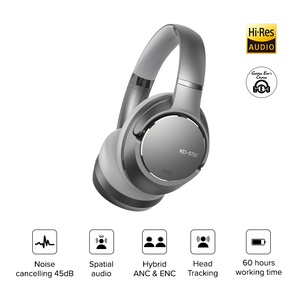
Utilizes directional beamforming paired with neural network DSP algorithms to separate the agent's vocal range (300Hz-3.4kHz) from surrounding floor noise, attenuating up to 45dB of acoustic clutter.
Integrated PeakStop™ and SafeTone™ hardware limiters instantly clip acoustic spikes exceeding 118 dBA, protecting agents from permanent acoustic trauma and ensuring full compliance with OSHA and EU Noise at Work Directive standards.
Engineered with dual-bus architecture supporting USB-A, USB-C, 3.5mm Quick Disconnect (QD), Bluetooth 5.4 Multipoint, and DECT Security Step C protocols for seamless desktop-to-mobile switching.
Call center agents spending 8 to 10 hours per shift on active calls are continuously exposed to sudden line interference, fax tone bursts, and network pop artifacts. Standard consumer headsets allow voltage surges to transmit directly into the speaker driver, causing sound pressure level spikes that breach 120 dB SPL.
Our OEM factory-engineered headsets integrate a multi-stage physical and electronic barrier. First, an analog Zener diode clamp clips high-voltage transient audio signals at the PCB level. Second, a digital signal processor (DSP) analyzes dynamic range in real-time, executing soft-knee compression on incoming audio streams above 85 dBA. This dual-protection matrix ensures agent safety without truncating human speech clarity or dropping subtle conversational nuances.
The operational lifespan of call center headsets is heavily dictated by physical stress. In 24/7 BPO environments, headsets are routinely dropped, twisted, and adjusted thousands of times per week. Our manufacturing facility implements strict physical QA standards prior to mass production:
Procurement directors and B2B technology vendors must align their product sourcing with upcoming shifts in enterprise architecture, workplace ergonomics, and global regulatory landscapes. Based on market data and proprietary customer intelligence, we identify four critical macro-trends driving hardware purchasing over the next decade.
As remote and hybrid work environments remain standard, background noise in home offices (dogs barking, traffic, domestic appliances) presents a severe distraction. Cloud-based noise cancellation adds bandwidth overhead and latency to VoIP streams. Future enterprise procurement demands zero-latency Edge-AI Noise Cancellation embedded directly inside the headset inline control capsule or USB dongle chipsets. Sourcing hardware equipped with low-power RISC-V audio NPU processing allows real-time noise suppression before sound ever reaches the software layer.
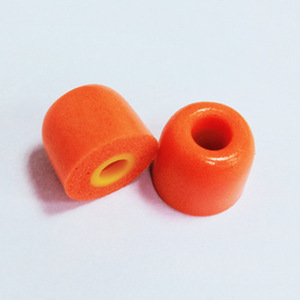
Prolonged in-ear or tightly sealed over-ear usage often leads to agent ear canal fatigue, moisture accumulation, and localized skin inflammation. Procurement leads are turning to lightweight micro-on-ear and air-conduction open-ear designs that utilize specialized memory foam ear pads (such as customized rebound tips) and breathable leatherette coverings. Ensuring thermal dissipation and pressure distribution across the temporal bone reduces physical agent discomfort and sick leave requests.
Global environmental regulations, including EU Eco-Design directives and corporate ESG scoring, are reshaping hardware RFP specifications. Enterprise buyers now mandate modular designs where wear-and-tear parts—such as ear cushions, headband cushions, microphone booms, and connecting cables—can be replaced independently without discarding the main driver housing. Our OEM manufacturing facility offers fully modular headset frameworks, reducing e-waste by up to 60% across an enterprise lifecycle.
Plug-and-play USB hardware is no longer sufficient. Enterprise procurement requests hardware with hard-coded firmware controls that offer native call control (Answer/End, Mute Sync, Volume +/-) with key softphone software platforms. Custom HID (Human Interface Device) commands flashed at the factory level guarantee immediate synchronization with Microsoft Teams, Zoom, Avaya, Genesys, and Cisco Jabber without requiring end-users to install third-party background applications.
To assist OEM brand managers and enterprise sourcing leads in building targeted catalog portfolios, the matrix below highlights key technical parameters across primary call center headset categories:
| Headset Category | Target Environment | Acoustic Technology | Connectivity Options | Recommended Deployment |
|---|---|---|---|---|
| Mono USB/QD Entry-Level | High-Density On-Premise BPO | Cardioid Passive Noise Cancelling Mic, 30mm Neodymium Driver | USB-A, USB-C, 4-Pin QD (Plantronics/Jabra Type) | High-volume agent seats, basic customer service desks |
| Duo Premium AI-ENC | Hybrid / Home Office & Noisy Centers | Dual-Mic Active Beamforming + Neural DSP, PeakStop Protection | USB-C with Inline Controller, USB-A Adapter | Financial support, tier-2 technical helpdesks, tele-sales |
| DECT Enterprise Wireless | Management & Mobile Supervisors | Wideband Audio, 64-Bit DECT Encryption (Security Step C) | DECT Base Station + Dual USB/RJ9 Desk Phone Passthrough | Floor supervisors, escalation teams, executive support |
| Bluetooth 5.4 Hybrid Work | Unified Communication / Travel | Hybrid ANC (Feedforward + Feedback), Multipoint Bluetooth | Bluetooth 5.4, 2.4GHz Low-Latency USB Dongle, 3.5mm Aux | Hybrid workers, remote managers, multi-device agents |
Choosing the right OEM/ODM partner is the single most critical factor in achieving competitive margins and consistent product quality. As an established direct manufacturing facility, we offer complete end-to-end industrial product development—taking your project from initial concept sketches and acoustic modeling to mass assembly and international certification.
Our state-of-the-art facility houses specialized R&D teams across multiple disciplines:
Every headset manufactured in our facility undergoes rigorous multi-tier testing before shipment. We provide full documentation support to facilitate rapid market entry into North America, Europe, Asia-Pacific, and Latin America:
CE, FCC, RoHS, REACH, WEEE, TELEC, and California Prop 65 compliance guaranteed for all standard and custom hardware runs.
Certified testing against EN 50332-1, EN 50332-2, and OSHA 1910.95 occupational noise exposure guidelines.
Operational thermal testing from -20°C to +60°C, 95% humidity aging chambers, and 1.5-meter concrete drop impact testing.
Here are clear, authoritative answers to the most common questions raised by enterprise buyers, OEM brand clients, and procurement specialists during factory evaluation.
For standard models with custom silk-screened logos, customized packaging, and custom user manuals, our standard MOQ starts at 1,000 units per model. For deep ODM projects involving unique plastic injection tooling, custom acoustic cavity design, or bespoke PCBA layouts, the typical tooling threshold is 3,000 to 5,000 units depending on complexity.
Our factory manufactures 100% pin-compatible Quick Disconnect (QD) connectors that interface seamlessly with standard Plantronics (Poly) and Jabra QD cable configurations. We supply QD-to-RJ9, QD-to-3.5mm, and QD-to-USB control cables, allowing enterprises to upgrade headset tops without re-cabling their entire desk phone infrastructure.
Yes. Our firmware engineering team can pre-flash custom USB HID (Human Interface Device) descriptors onto the inline USB DSP chipsets. This enables native, driverless volume sync, microphone mute LED synchronization, and call hook control directly with Microsoft Teams, Zoom, Avaya IX, Cisco Jabber, and cloud CCaaS web-browsers.
For dense floor spaces with agents seated within 1 meter of each other, we strongly recommend our Dual-Microphone AI-DSP solution. While passive cardioid mic booms provide basic noise reduction, Dual-Mic AI-ENC actively filters out neighboring agent voices, preventing acoustic spillover into customer calls and boosting automated QA transcription accuracy.
For standard OEM orders (existing tooling with custom branding), typical production lead time is 25 to 30 business days following sample approval and deposit confirmation. For custom ODM projects requiring new mold tooling, prototype sampling, acoustic tuning, and international regulatory certification, the end-to-end timeline ranges from 60 to 90 days.
We enforce ISO 9001:2015 certified quality management systems across every stage of assembly. 100% of finished headsets pass through automated acoustic computer testing (verifying THD, frequency response, microphone sensitivity, and SPL limiters) before final packaging. Our AQL (Acceptable Quality Limit) standard for main defect categories is 0.65 for critical and 1.0 for major defects.
Partner directly with a leading Call Center Headsets Factory & Supplier. Contact our engineering and business development team today to request product samples, factory audits, or custom tooling estimates.
Get a Quote