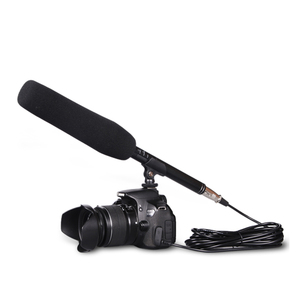

Explore our flagship noise reduction gear, acoustic accessories, and precision hearing safety products tailored for OEM/ODM global distribution.
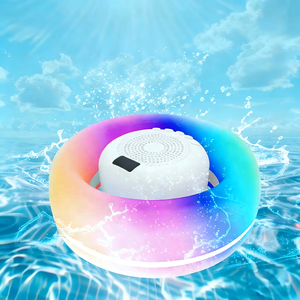
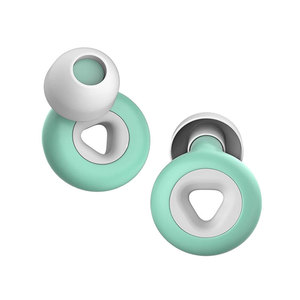
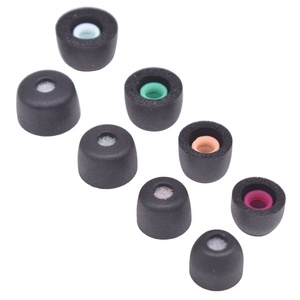
An authoritative analysis of modern acoustic attenuation metrics, industrial ergonomics, and custom private-label earmuff manufacturing protocols.
In high-decibel industrial, military, tactical, and shooting sports environments, hearing protection is not merely an accessory—it is a critical personal protective equipment (PPE) baseline. As a premier OEM/ODM Noise Reduction Earmuffs Factory & Exporter, our manufacturing philosophy merges advanced mechanical acoustics, material science, and precision digital signal processing (DSP) to deliver superior Noise Reduction Ratings (NRR) and Single Number Ratings (SNR).
Procurement directors evaluating enterprise earmuff solutions must navigate stringent global compliance standards. In North America, the American National Standards Institute protocol (ANSI S3.19-1974) measures acoustic attenuation across nine discrete frequency bands (from 125 Hz to 8000 Hz). In the European Union, the EN 352 series (specifically EN 352-1 for headband earmuffs and EN 352-3 for helmet-mounted variants) mandates rigorous evaluation of headband force, drop resistance at extreme temperatures (-20°C to +50°C), and acoustic seal consistency.
Our OEM/ODM manufacturing facility integrates an in-house full-hemispheric anechoic chamber equipped with artificial head simulators (Type 4128-C) to real-time stress-test passive acoustic damping. By engineering multi-density acoustic resonance chambers inside the ear-cup shell, our design team effectively eliminates back-wave reflection and dampens low-frequency rumble typical of heavy machinery, diesel generators, and jet turbine operation.
The acoustic seal around the human pinna is the most crucial failure point in real-world noise attenuation. A gap as small as 1mm can decrease protective attenuation by upwards of 8 to 12 dB. To counteract this vulnerability, our customized ODM earmuffs utilize multi-layer sound-absorbing architectures:
Selecting the appropriate noise attenuation architecture based on operational environmental demands.
| Earmuff Category | Noise Attenuation Spec | Primary Technology | Target Industrial Application | OEM/ODM Customization Scope |
|---|---|---|---|---|
| Passive Industrial Series | NRR 26dB – 31dB / SNR 30dB – 36dB | Multi-cavity ABS Cup + High-Density Polyurethane Foam | Construction, Metal Stamping, Airport Tarmacs, Forestry | Custom Cup Pantone Colors, Molded Branding, Gel Ring Upgrades |
| Electronic Sound Amplification | NRR 22dB – 25dB / SNR 27dB – 29dB | Omni-Directional Microphones + Compression Circuitry (<2ms) | Shooting Sports, Tactical Operations, Industrial Inspection | Custom Sound Profiles, Camouflage Hydro-dipping, AUX Input |
| Bluetooth 5.4 Wireless Workstation | NRR 24dB – 28dB / SNR 28dB – 32dB | Qualcomm Audio SoC + DSP Beamforming Noise-Canceling Mic | Logistics Centers, Manufacturing Plants, Remote Teams | Custom Firmware/Voice Prompts, Private Label App, Battery Capacity |
| Hybrid Active Noise Cancelling (ANC) | NRR 28dB – 34dB / SNR 32dB – 37dB | Feedforward + Feedback Dual Mic ANC + Passive Acoustic Barrier | Aviation Maintenance, Heavy Rail Infrastructure, Datacenters | Full Concept-to-Production ODM, Smart Ambient Transparency Tuning |
Understanding macro shifts in regulatory compliance, smart technology integration, and sustainable supply chains.
Modern enterprise buyers no longer settle for static passive isolation. Procurement trends show a 42% YoY surge in demand for Level-Dependent Situational Awareness earmuffs. These systems amplify safe environmental sounds (such as human speech, warning sirens, and moving forklift alerts below 82 dB) while instantly compressing dangerous impulse noises above 85 dB within 2 milliseconds.
Global brand owners face increasing scrutiny regarding Scope 3 carbon emissions and plastic waste. As an ethical export manufacturing leader, our factory is pioneering the use of recycled ocean-bound ABS plastics for ear-cup housings, bio-based polyurethane memory foams, and plastic-free recyclable retail packaging, enabling importers to achieve full ESG certification.
Industrial safety regulations increasingly require unified head, face, and hearing protection. Future OEM procurement focuses heavily on modular slot-mount adapters compatible with major global safety helmet brands (e.g., MSA, 3M, KASK). Our ODM engineering team provides custom multi-angle tension arm mounts designed for 360-degree rotation and quick parking positions.
Leveraging over two decades of lab-tuned acoustic engineering, vertically integrated manufacturing, and international trade compliance.
Unlike trading intermediaries, our production hub houses precision CNC machining centers, EDM spark machinery, and over 40 high-tonnage plastic injection machines. We maintain total quality control from initial CAD 3D modeling and acoustic simulation to final high-gloss, matte, or rubberized surface finishing. This vertical integration reduces custom OEM tooling lead times by up to 35% compared to industry benchmarks.
Exporting to tier-1 markets requires flawless documentation. Our dedicated compliance department ensures that every production batch complies with CE EN 352, ANSI S3.19, AS/NZS 1270, REACH, RoHS, and FCC/IC regulations. We publish transparent test reports, safety data sheets (SDS), and PSTI compliance declarations to ensure hassle-free customs clearance and swift retail onboarding.
Everything you need to know about our OEM/ODM custom services, tooling schedules, certifications, and volume orders.
For standard private-label branding (custom logo printing, customized Pantone colors, and bespoke packaging), our standard MOQ starts at 1,000 units per model. For complete ODM projects requiring custom acoustic housing tooling or specialized PCB electronic design, our typical baseline MOQ is 3,000 to 5,000 units, depending on the complexity of the mold architecture and component sourcing.
Every custom acoustic design undergoes pre-testing in our internal sound laboratory to verify NRR and SNR target ranges. Once the golden sample is signed off, we submit units directly to accredited third-party test houses (such as NVLAP accredited labs in the USA, or BSI/PZT notified bodies in Europe) to obtain official certification certificates issued under your brand name or our factory license.
A standard ODM design cycle follows a structured timeline: (1) Industrial Design & 3D Acoustic Modeling: 10–14 days; (2) Rapid Prototyping & SLA 3D Printing for acoustic validation: 7 days; (3) Steel Injection Tooling Development: 35–45 days; (4) T1 Sample Trial & Engineering Review: 7–10 days; (5) Mass Production: 30–35 days upon final sample approval.
Yes. Our electronics engineering division specializes in integrating Bluetooth 5.3/5.4 SoCs, multi-mic DSP noise cancellation algorithms, FM/AM tuner modules, and level-dependent compression circuitry into earmuff housings. We provide complete firmware customization, including custom Bluetooth pairing names, voice prompts in multiple languages, and specialized EQ curves tailored to your market requirements.
Our ISO 9001:2015 certified factory enforces strict AQL 1.0/2.5 inspection standards. Every unit passes through automated testing stations: Headband Clamping Force Fatigue Testing (10,000 extension cycles), Drop Impact Tests at -20°C, Acoustic Attenuation Frequency Sweeps, and IPX4/IPX6 Water Ingress Verification for outdoor tactical models.
Absolutly. We provide end-to-end export solutions including full-color retail window boxes, eco-friendly clam-shell packaging, multi-lingual instruction manuals, master carton barcoding (GS1 compliant), and flexible freight options (FOB, CIF, DDP by ocean, air, or express rail) directly to your regional distribution centers worldwide.
Partner with a trusted global OEM/ODM manufacturer. Contact our acoustic engineering sales team today to request technical datasheets, sample kits, or a detailed custom quotation.