
Engineered for True Wireless Stereo (TWS), Hearables, Medical Screening Equipment, and Audiophile Replacement Markets.
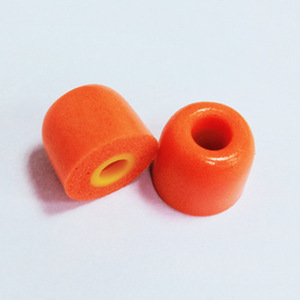
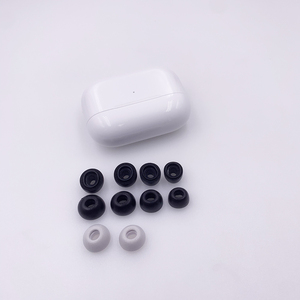
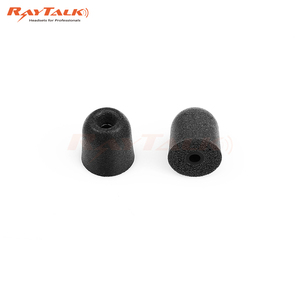
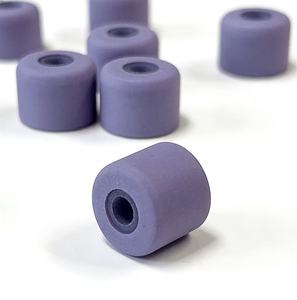
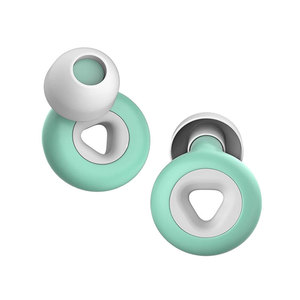
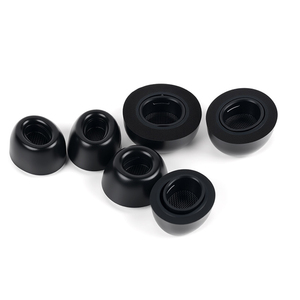
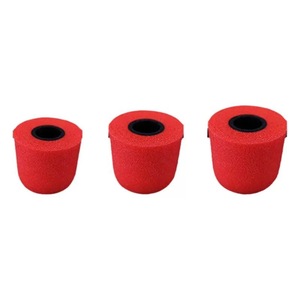

As premier global manufacturers and exporters of acoustic ear components, our product development is grounded in polymer physics and auditory science. Standard silicone ear tips suffer from acoustic leakage caused by micro-gaps between rigid synthetic elastomers and the dynamic contours of the human ear canal. By contrast, specialized open-cell viscoelastic polyurethane (PU) foam transforms ear canal sealing into a dynamic hydrostatic system.
When compressed, the cell walls of viscoelastic memory foam collapse uniformly without creating localized pressure spikes. As body temperature warms the polyurethane matrix (typically around 36.5°C to 37°C), the polymer undergoes a glass transition phase shift, lowering its modulus of elasticity. This allows the ear tip to expand into every microscopic ridge of the external auditory meatus, creating an airtight acoustic seal without triggering cartilage discomfort or focal ischemia during prolonged wearing sessions.
Acoustic Information Gain: Standard silicone tips deliver a passive noise isolation rating (NRR) of 15dB to 22dB, primarily attenuating higher frequencies (>4kHz). Precision-molded slow-rebound memory foam ear tips consistently deliver passive isolation between 28dB and 35dB, significantly flattening ambient noise across lower sub-bass registers (100Hz–500Hz) and critical speech vocal frequencies (1kHz–3kHz).
| Performance Metric | Viscoelastic PU Foam | Medical Silicone | Hybrid Composite (Foam + Silicone) |
|---|---|---|---|
| Passive Noise Attenuation (NRR) | Superior (28dB - 35dB) | Moderate (18dB - 24dB) | High (26dB - 32dB) |
| Ear Canal Contact Pressure | Ultra-Low (Uniform expansion) | Medium to High (Radial tension) | Low-Medium (Adaptive outer flange) |
| Bass Frequency Response (20Hz - 200Hz) | Maximum extension & zero air leakage | Prone to acoustic seal break during movement | Consistent sub-bass performance |
| Durability & Cleanability | 3–6 Months (Requires dry wipe) | 12+ Months (Washable with water) | 6–12 Months (Wipe clean exterior) |
| High-Frequency Resonance Damping | Attenuates harsh micro-reflections (4k-8k) | Reflects HF back into canal (Bright acoustic signature) | Balanced acoustic wave damping |
As trusted exporters to tier-one audio brands, clinical healthcare facilities, and international consumer electronic chains, our manufacturing infrastructure adheres to strict ISO 9001:2015 quality management protocols. High-performance ear tips are not merely punched out from industrial foam sheets; they are precision injection-molded using custom bio-polyol formulations in ISO Class 7 cleanroom facilities.
Every batch of memory foam undergoes rigorous ISO 10993-5 cytotoxicity testing, ISO 10993-10 skin sensitization evaluation, as well as full REACH, RoHS, and SVHC compliance checks to guarantee skin-safe, non-allergenic wearability.
Our chemical engineers customize the viscoelastic rebound timing from rapid recovery (2-3 seconds) for quick insertion medical testing up to slow recovery (5-9 seconds) for premium consumer TWS products.
We co-mold integrated hydrophobic nano-mesh filters over inner stem bores to prevent earwax and moisture ingress into delicate ANC microphones and balanced armature drivers without altering acoustic impedance.
Our internal testing facilities feature artificial ear simulators (IEC 60318-4 / Type 711 couplers) and sound isolation chambers where ear tips undergo automated insertion/extraction durability trials exceeding 5,000 cycles, ensuring inner structural core stems maintain mechanical snap-lock grip strength without splitting or separating from the foam body.
The global earphone accessories market is undergoing structural shifts driven by advancements in Hearable technology, Active Noise Cancellation (ANC), and Over-The-Counter (OTC) hearing aids. B2B purchasing managers, brand sourcing directors, and audio accessories buyers must align their procurement strategies with four key emerging industry trends:
Modern TWS earbuds feature larger acoustic chambers and internal battery housings, reducing available space inside charging cases. Traditional cylindrical memory foam tips often block lid closure or interrupt magnetic charging pins. Modern procurement is rapidly pivoting toward ultra-compact oval and low-profile memory foam tips engineered specifically for tight-fit charging cases such as Apple AirPods Pro 2/3, Sony WF-1000XM5, and Samsung Galaxy Buds Series.
Legacy foam ear tips suffered from stem detachment when removed from sound nozzles. Advanced OEM suppliers now utilize multi-durometer co-extrusion moulding. Harder thermoplastic elastomers (TPE: Shore 70A–80A) form the internal core stem for rigid nozzle locking, while ultra-soft memory foam (Shore 00-10) is chemically bonded to the exterior for maximum comfort.
Infant hearing screening, tympanometry, and brainstem auditory evoked response (ABR) diagnostic routines require instant, air-tight canal seals across pediatric and adult patient demographics. Demand for medical-grade, single-use color-coded PU foam tips with standardized Luer-lock adapters is growing at an estimated CAGR of 8.4% globally.
In response to international carbon-neutral mandates, leading ear tip exporters are transitioning from 100% petroleum-based polyols to bio-based polyurethane formulations derived from renewable castor bean oil and vegetable oil feedstocks. Combined with GRS-certified recycled TPE cores, these sustainable solutions offer corporate procurement teams verified environmental compliance without compromising acoustic rebound performance.
Building on decades of acoustic accessory manufacturing heritage—originally validated through lab-tuned audio engineering in Carlsbad, California and expanded across international B2B sales networks—our manufacturing eco-system provides seamless scalable supply solutions for retailers, audio brands, and enterprise teams worldwide.
Whether you require custom sound-stem nozzle dimensions (2.0mm, 3.0mm, 4.5mm, or 5.5mm), custom pantone color matching, or branded retail blister packaging, our rapid prototyping tooling team delivers T1 sample molds within 7-10 business days.
Eliminate middle-tier trading markups by dealing directly with automated foam injection production lines. Scale-optimized raw material sourcing ensures competitive volume pricing structures for large enterprise orders.
We provide comprehensive technical documentation packages for every shipment, including safety data sheets (SDS), material traceability certificates, compliance test reports, and customs clearing documentation for frictionless import processing.
When stored in sealed, moisture-proof anti-UV polybags at room temperature (15°C to 25°C) away from direct sunlight, our high-density memory foam ear tips maintain optimal viscoelastic recovery properties for 24 to 36 months. We incorporate specialized anti-yellowing and antioxidant additives into our foam polyols to prevent oxidative discoloration during long-term warehouse storage.
Yes. We specialize in custom OEM stem engineering. If your earphone design features non-standard elliptical, oval, or snap-latch nozzle geometries (such as those found on Apple AirPods Pro, Sony WF-series, or specialized hearing aid receivers), our R&D team can produce custom injection-molded TPE inner cores to match your exact CAD specifications, ensuring ideal retention force without stem slippage.
For standard black or gray foam ear tips, our MOQ starts at 1,000 pairs. For custom Pantone color matching (such as vibrant pink, azure blue, or custom brand-specific hues), the standard MOQ is 3,000 to 5,000 pairs depending on the specific stem tooling and foam density requested.
Viscoelastic foam significantly enhances overall ANC efficiency. Hybrid ANC systems rely on feedforward and feedback microphones to cancel predictable low-frequency ambient sounds (like jet engines or HVAC rumble). However, high-frequency transient noise (like voices or key clicks) must be blocked mechanically by passive isolation. Memory foam eliminates acoustic seal gaps, allowing the internal ANC DSP algorithms to operate in a controlled acoustic cavity, improving effective noise reduction by up to 6dB - 10dB over standard single-flange silicone tips.
All foam batches undergo artificial perspiration immersion testing (ISO 105-E04) to confirm that skin oils and sweat do not break down the polyurethane polymer matrix prematurely. Additionally, materials are verified skin-safe under ISO 10993 cytotoxicity and sensitization protocols, ensuring no irritation during prolonged sports, industrial, or daily use.
Equip your product lines, TWS retail inventory, or medical screening kits with high-attenuation, bio-compatible viscoelastic memory foam ear tips. Speak directly with our acoustic engineering and procurement support team today.
Inquire Now