
Engineered for extreme noise isolation, custom ear-canal ergonomic memory retention, and universal OEM cross-compatibility.
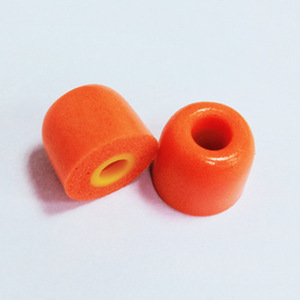
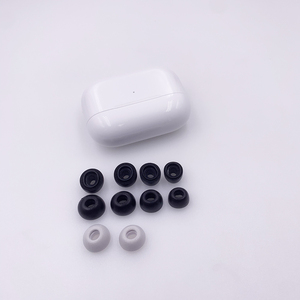
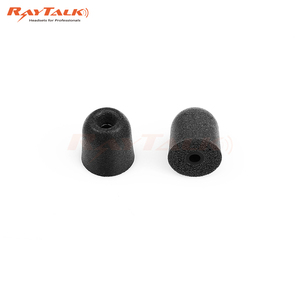
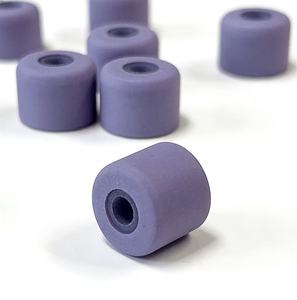
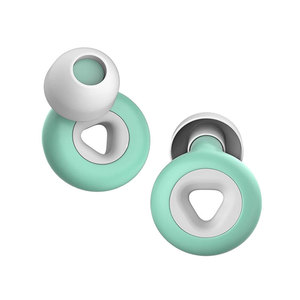
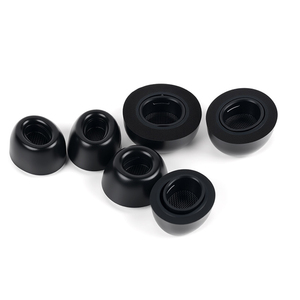
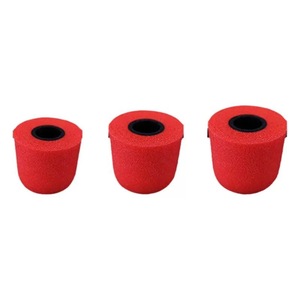
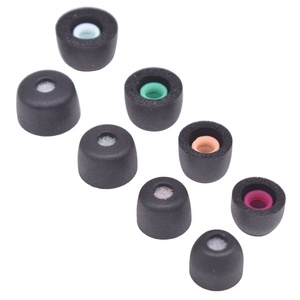
In the modern acoustic landscape—spanning heavy industrial manufacturing corridors in the Greater Chicago area to audiophile-grade wireless true wireless stereo (TWS) systems—the mechanical interface between an electronic acoustic transducer and the human external auditory canal presents a critical engineering challenge. Standard molded silicone eartips frequently suffer from acoustic leakage, inadequate low-frequency compliance, and localized pressure discomfort due to anatomical variations in ear canal morphology.
As leading foam ear tips manufacturers servicing Chicago, the Midwest industrial sector, and international OEM procurement teams, our focus centers on proprietary open-cell viscoelastic polyurethane (PU) polymer chemistry. By controlling the glass transition temperature ($T_g$) and cellular cross-linking density during the reaction injection molding (RIM) phase, our high-density memory foam ear tips exhibit controlled hysteresis rebound times (typically 3.0 to 5.5 seconds). This specific temporal decay allows workers and audiophiles to roll, compress, and insert the ear tip, achieving a custom pressure-equalized acoustic seal before full thermal expansion occurs against the ear canal wall.
Acoustic Insight: Viscoelastic foam ear tips improve Passive Noise Isolation (PNI) by up to 12dB across the 250Hz - 4kHz critical spectrum compared to standard single-flange silicone tips, drastically minimizing sub-bass cancellation and preventing noise-induced hearing loss (NIHL) in industrial workplace environments.
Industrial health officers and audio procurement specialists in Illinois evaluate ear tip materials across four primary physical vectors: attenuation performance, mechanical endurance, thermal reaction, and surface hygiene. Below is an engineering comparison detailing performance differences:
| Performance Parameter | Viscoelastic PU Memory Foam | Standard Liquid Silicone Rubber (LSR) | Thermoplastic Elastomer (TPE) |
|---|---|---|---|
| Noise Reduction Rating (NRR) | 28 dB – 33 dB (Highest Attenuation) | 18 dB – 22 dB (Moderate Attenuation) | 20 dB – 24 dB (Standard Attenuation) |
| Acoustic Seal & Seal Consistency | Auto-conforming 360° expansion; minimal leakage | Deforms under tension; anatomical gaps common | Fixed geometry; requires precise sizing fit |
| Thermal Adaptation Rate | Body-heat responsive; softens inside ear canal | Temperature inert; retains static stiffness | Slight softening at >37°C |
| Micro-Vibration Damping | Superior viscoelastic dampening of motor rumble | Transmits structural resonance above 1kHz | Moderate dampening capability |
| Biocompatibility Standard | ISO 10993-5 / ISO 10993-10 Certified | FDA Grade Silicone / Medical Grade | Standard Food-Contact Grade |
A primary failure point in conventional memory foam replacement ear tips is moisture degradation. Human ear canals produce lipid-rich cerumen and perspiration, which penetrate untreated open-cell foams, causing polymer hydrolytic breakdown, hardening, and bacterial colonization. Our proprietary manufacturing process incorporates an ultra-thin (15-25 nanometer) oleophobic and hydrophobic surface polymer matrix applied via plasma vapor deposition (PVD).
This barrier prevents moisture ingress while preserving the breathable open-cell matrix necessary for acoustic energy dissipation. Consequently, Chicago-area industrial operations—ranging from food processing facilities along the Interstate 55 industrial corridor to assembly plants in suburban Cook County—experience up to a 300% extension in ear plug operational lifecycles without compromising hygienic safety or acoustic dampening performance.
Tailored acoustic solutions designed for the unique operational demands of Chicago’s industrial, transportation, healthcare, and commercial audio sectors.
From automotive stamping plants in Belvidere to metal fabrication units in South Chicago and Elgin, high continuous ambient noise levels (exceeding 95 dBA) require compliant hearing protection. Our high-NRR push-in foam ear tips integrate directly into walkie-talkie headsets and radio comms, allowing seamless voice intelligibility alongside OSHA-compliant hearing conservation.
O'Hare International Airport represents one of North America's densest aviation hubs. Ground crew operations, jet engine maintenance, and cargo handling environments generate extreme acoustic energy across broadband frequencies. Specialized walkie-talkie noise-reduction PU foam tips deliver stable acoustic seals under heavy headset clamp pressure, preserving critical communication lines for tarmac personnel.
Chicago's world-class medical centers, including Northwestern Medicine and Rush University Medical Center, rely on specialized disposable slow-rebound ear tips for diagnostic tympanometry, otoacoustic emission (OAE) testing, and automated auditory brainstem response (AABR) screenings. Our medical-grade PU foam ear tips ensure zero acoustic cross-contamination and precise canal insertion.
The manufacturing sector in Illinois operates under stringent safety frameworks overseen by OSHA Region 5 (headquartered in Chicago). Under 29 CFR 1910.95, employers are required to institute continuous Hearing Conservation Programs (HCP) whenever worker noise exposure equals or exceeds an 8-hour time-weighted average (TWA) of 85 dBA. As procurement managers evaluate foam ear tips manufacturers, compliance with ANSI S3.19-1974 testing standards has shifted from an optional feature to an absolute legal imperative.
Chicago corporate procurement policies are increasingly aligned with environmental, social, and governance (ESG) targets. Traditional viscoelastic foam manufacturing relied heavily on petrochemical polyols and volatile organic compound (VOC) blowing agents. Our 2025 product roadmap introduces eco-compliant bio-polyol formulations derived from renewable plant oils, reducing carbon emissions during foam synthesis by 42% while guaranteeing non-toxic skin contact compliance under California Proposition 65 and European REACH regulations.
With major corporate headquarters across downtown Chicago, the Loop, and West Loop tech hubs, commuter demographics have driven massive demand for aftermarket premium replacement ear tips. Standard silicone tips provided with flagships like Apple AirPods Pro 2, AirPods Pro 3, and Sony WF-1000XM5 frequently fail to maintain active noise cancellation (ANC) seals during physical movement or transit commutes on the CTA L-Train network. Custom-molded memory foam hybrid tips solve this issue by dampening external structural rumble and creating a seal that locks ANC algorithms into optimal performance parameters.
From custom color matching to specialized core-stem tooling, we deliver scalable enterprise supply chains tailored to high-volume buyers.
Our dual-injection molding process fuses rigid internal ABS/TPE attachment core stems directly with soft viscoelastic foam bodies. This eliminates core detachment issues common in cheap glued tips, ensuring safety during repeated ear canal insertion and removal.
We provide enterprise clients with custom foam formulation options ranging from soft (Asker C 10°) to firm (Asker C 35°), allowing clients to calibrate rebound speeds from fast 1.5s recovery to extra-slow 6.0s recovery tailored for medical or industrial specs.
For clinical audiology, hearing screening equipment, and medical-device OEMs, our production lines feature cleanroom environment manufacturing, ultrasonic washing, and individual vacuum blister packaging to maintain total sterility.
Answers to technical, regulatory, custom manufacturing, and ordering queries for commercial and industrial clients.
Our industrial noise reduction foam ear tips are independently lab-tested in accordance with ANSI S3.19-1974 standards to certify accurate Noise Reduction Ratings (NRR up to 33dB). Additionally, all raw materials satisfy OSHA 29 CFR 1910.95 requirements, ISO 10993 skin irritation/cytotoxicity standards, and European CE EN 352-2 hearing protection guidelines, allowing seamless integration into corporate Hearing Conservation Programs across North America.
Yes. Our in-house tooling and rapid prototyping department can design custom internal attachment cores matching non-standard sound nozzles (ranging from micro 2.0mm stems up to wide 6.5mm stems with internal retention grooves). We offer complete 3D STEP file tooling development with prototype sample turnarounds within 7 to 10 business days for Chicago enterprise clients.
For standard catalog items (such as AirPods Pro 2, Sony WF-1000XM5, or standard radio comms walkie-talkie foam tips), bulk wholesale orders start at 500 units with expedited air delivery options to Chicago (ORD/MDW hubs) within 5 to 7 business days. Custom OEM color-matched or custom-molded orders typically have an MOQ of 5,000 pairs with standard production lead times of 15 to 20 days.
Chicago experiences severe winter freezing conditions. Standard viscoelastic foam can stiffen in sub-zero temperatures. Our cold-weather resistant PU formulations incorporate plasticizers that maintain structural flexibility down to -15°C (5°F). Once inserted, the material rapidly absorbs body thermal energy from the ear canal, expanding to form a warm, windproof, and noise-isolating seal in sub-zero outdoor work environments.
Absolute enterprise support is available. We provide private label packaging solutions including custom retail blister packs, eco-friendly metal tins, sealed polybags, and branded multi-size carrier cases. Tiered volume pricing is structured for regional distributors, procurement agencies, and high-volume retail chains throughout Illinois and the Midwest region.